Set the scene the way you’d call it at the table. A top-down, gridless map comes back in under a minute.
Deadlands, Savage Worlds, or any six-gun table (systems and settings alike)
Frontier scenes are wide, dusty, and full of cover. Describe the train, the camp, or the ranch the way you would set it for the posse, and NeedAMap draws it from above with the trestle, the sluice boxes, and the corral where you said, ready for Roll20, Foundry VTT, Owlbear Rodeo, or print.
One train, one gulch, one crossing per map, at the scale where a five-foot square matters and a rifle shot across the yard is a real distance. The same description box handles a robbery on a bridge, a camp full of tents, and a church the desert is reclaiming.
Five western maps from the library. The exact words typed, and what came back.
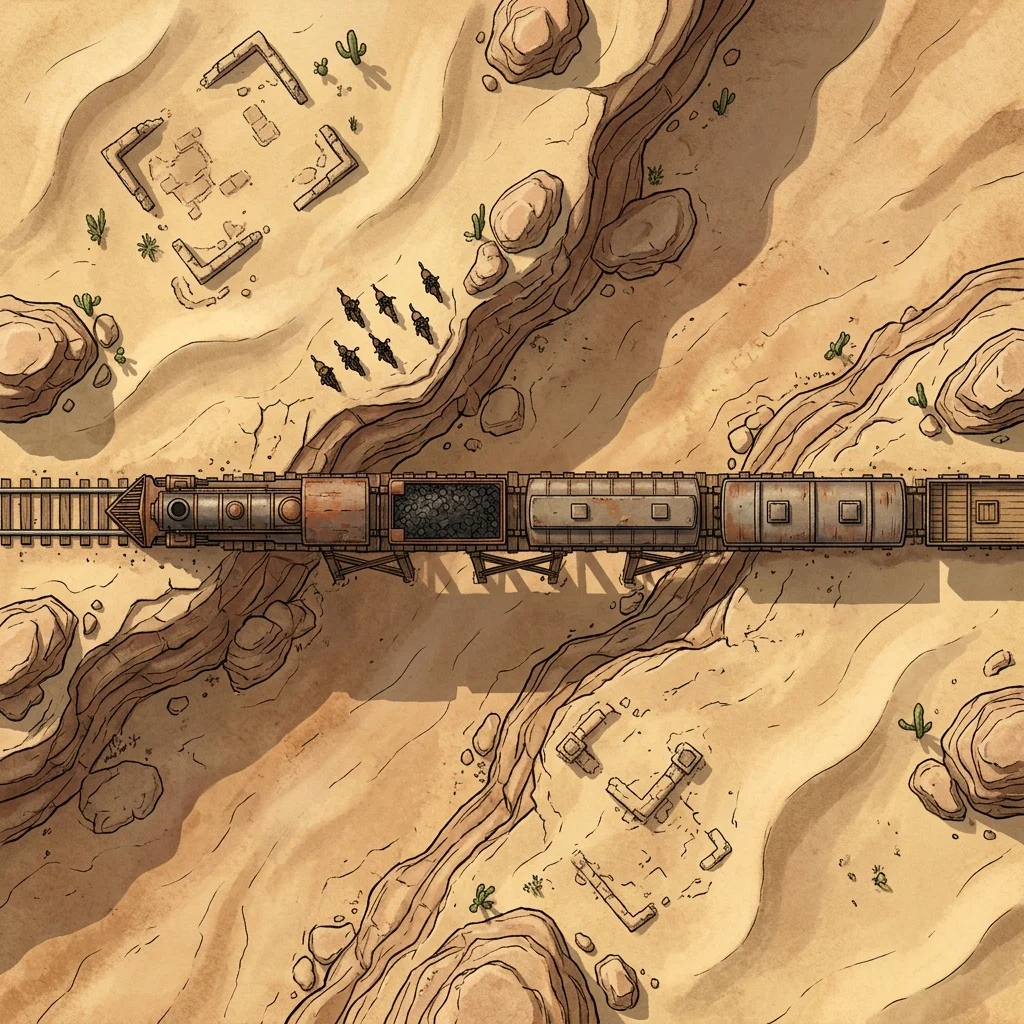
The description
“Western steam train robbery, cars stopped on a desert trestle bridge, coal tender open”
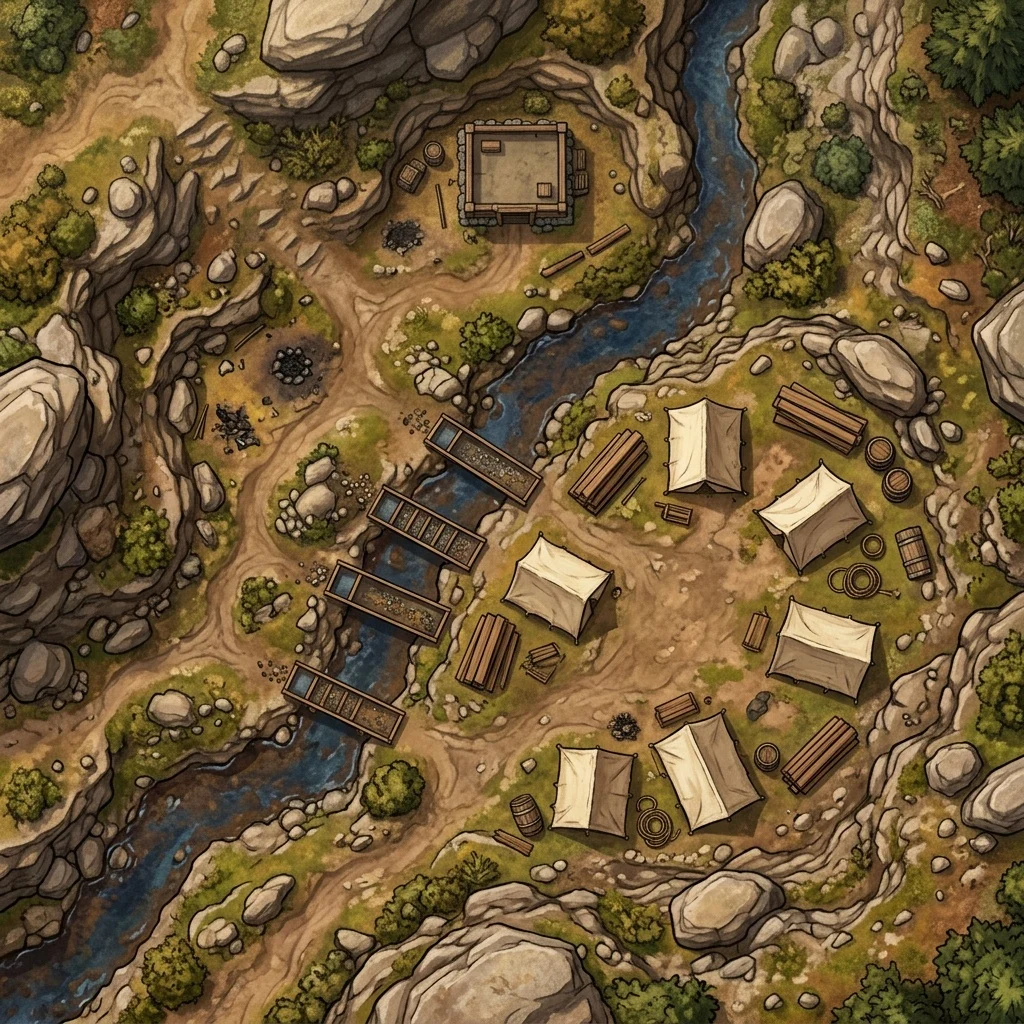
The description
“Gold mining camp in a gulch, sluice boxes, canvas tents, a dynamite shed”
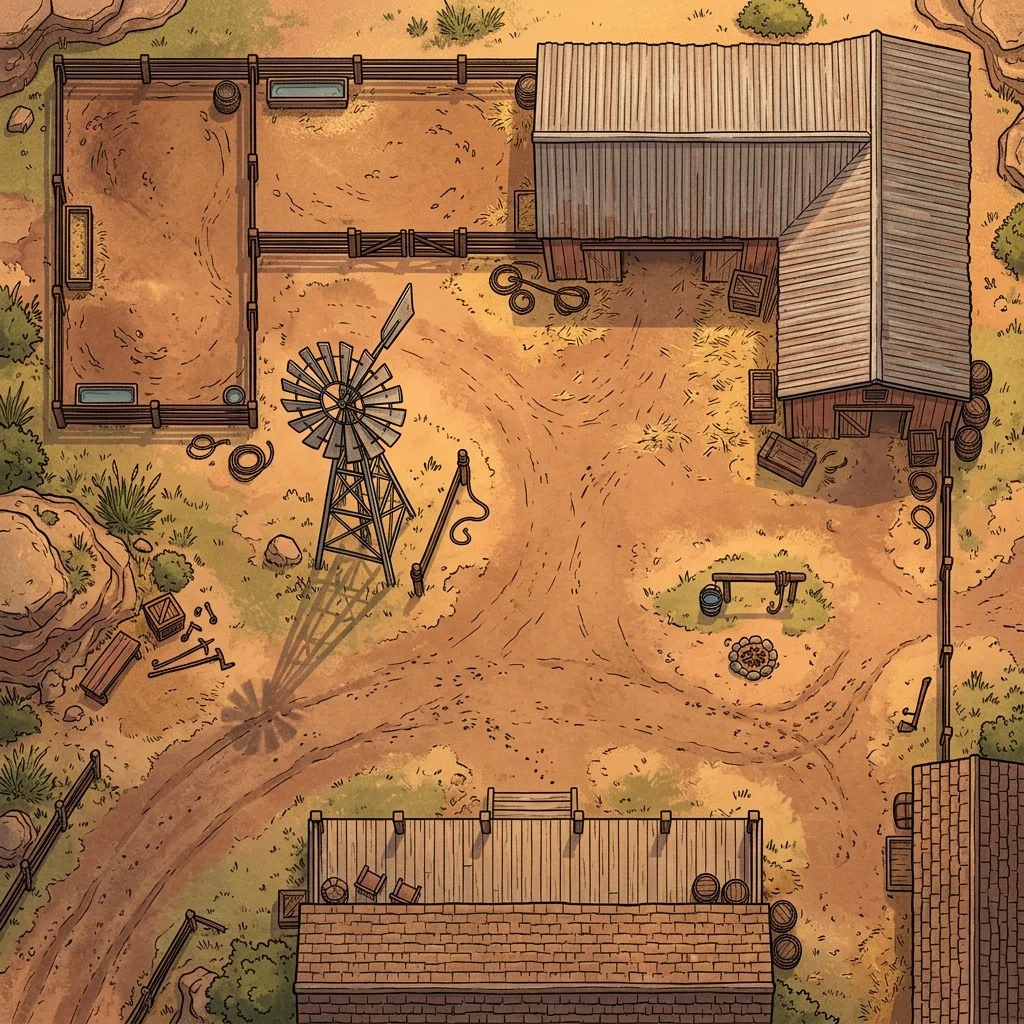
The description
“Cattle ranch at dawn, barn, corral, windmill, a wide ranch house porch”
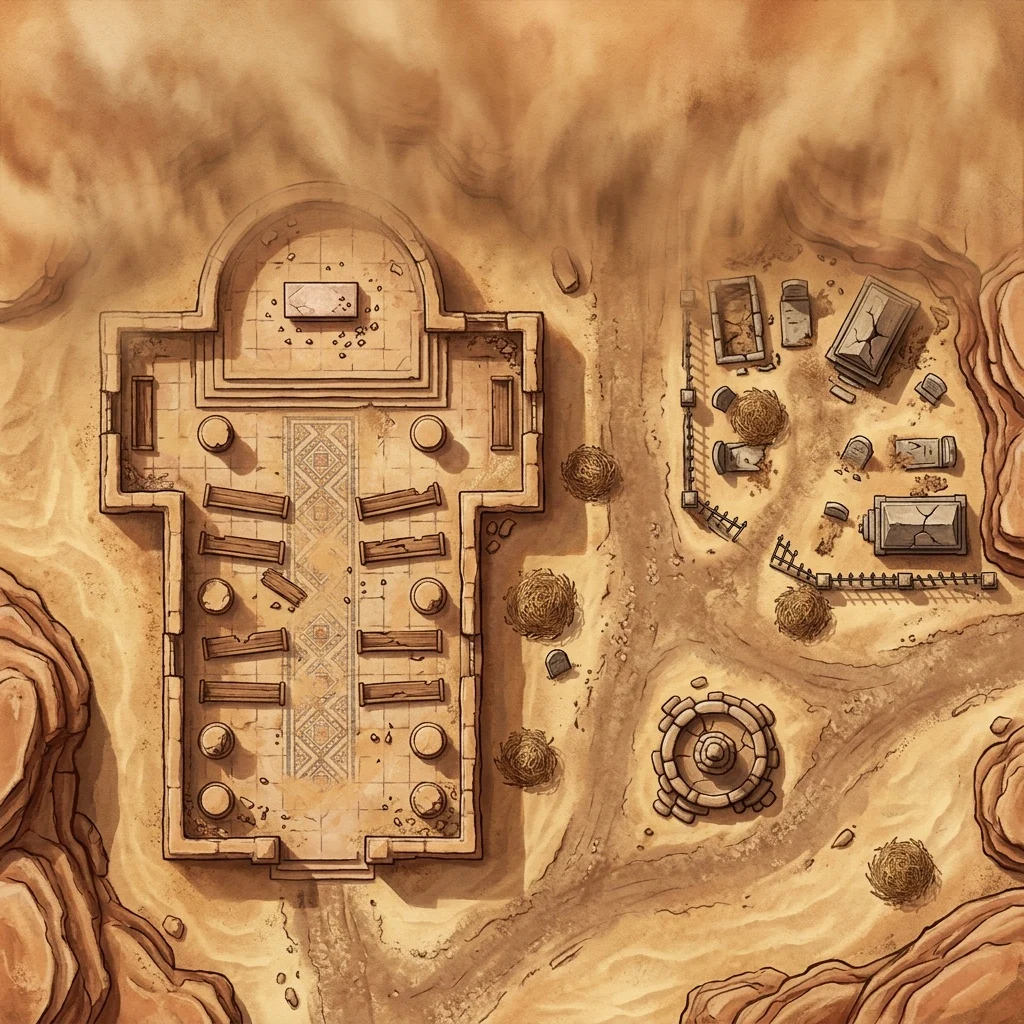
The description
“Ghost town church and cemetery, dust storm rolling in, tumbleweeds, a dry fountain”
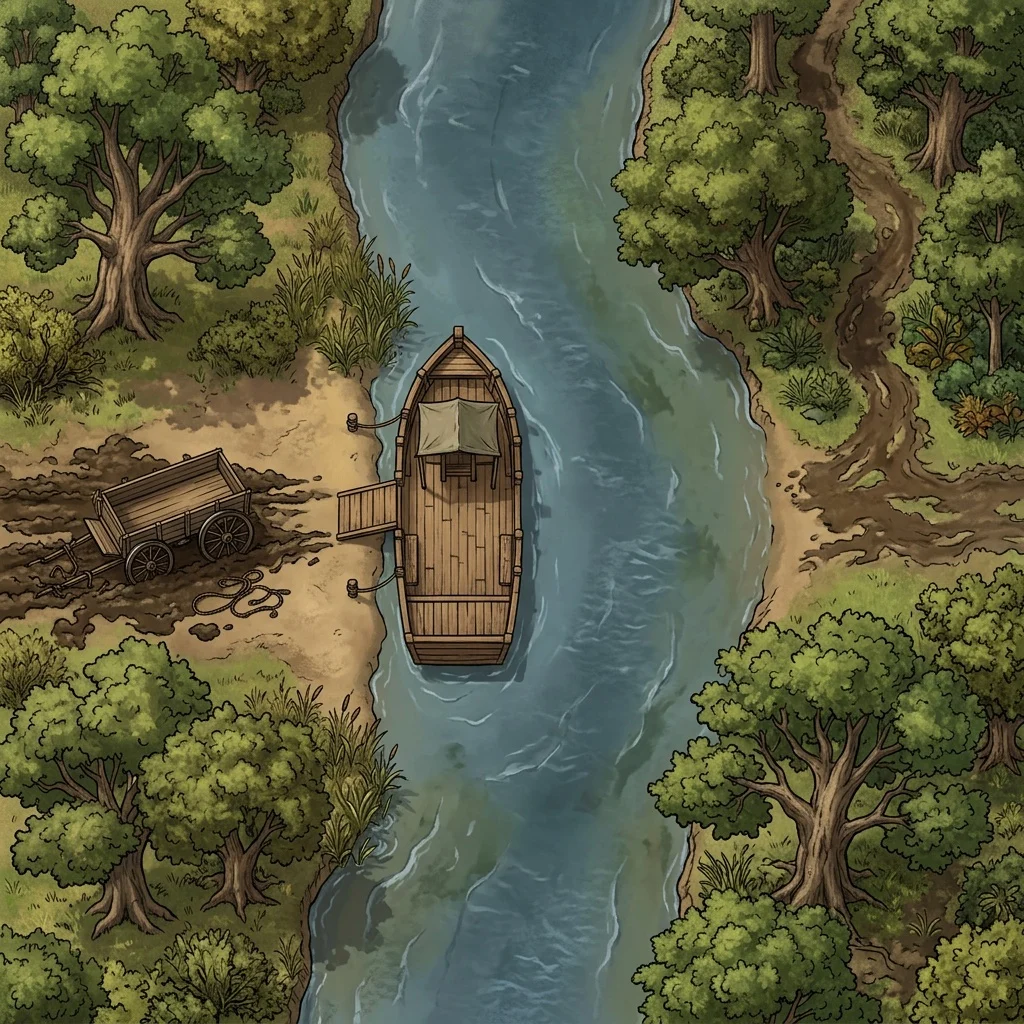
The description
“River ferry crossing, flatboat at the bank, cottonwoods, a wagon stuck in mud”
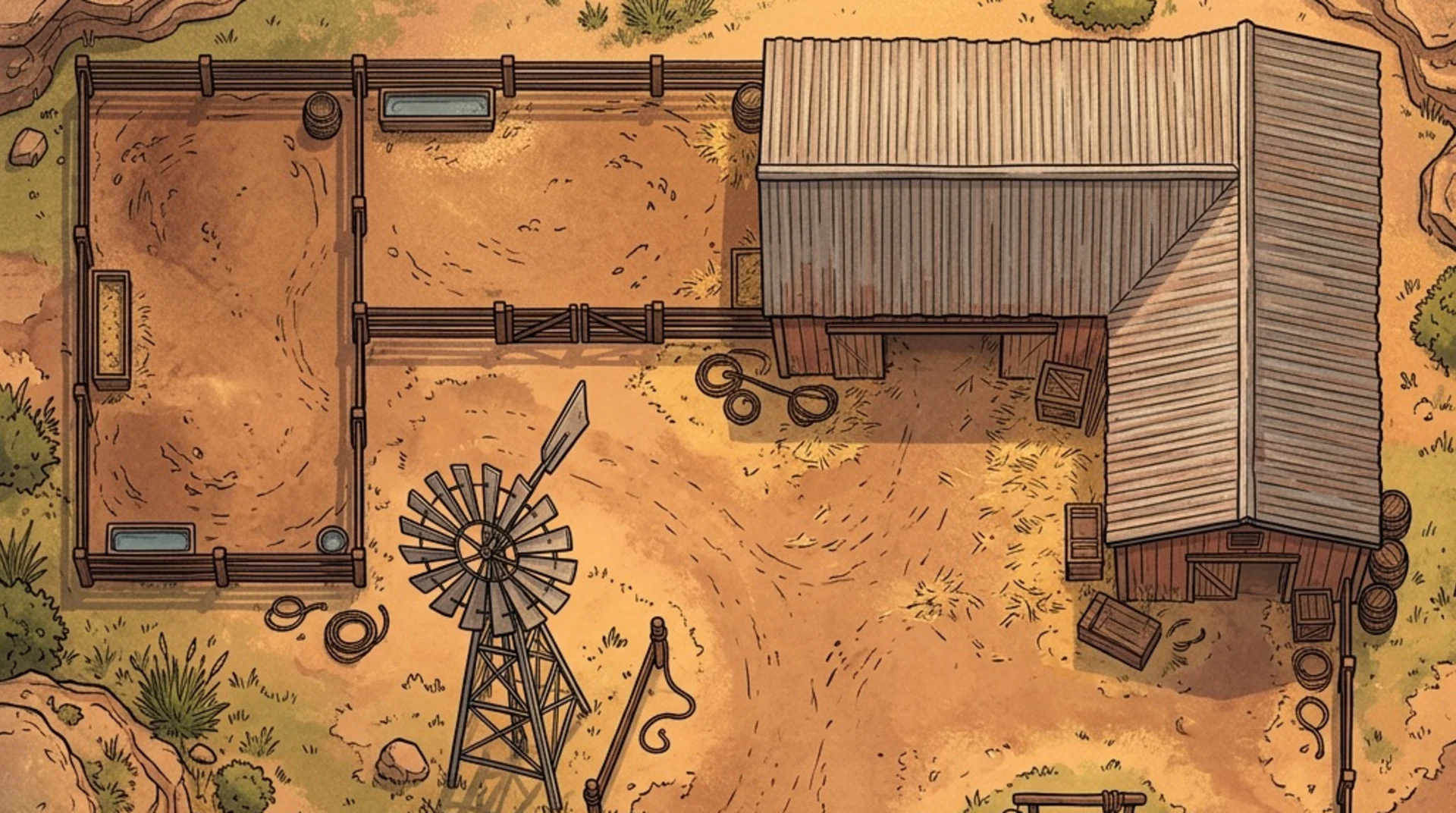
Cars stopped on a bridge, the coal tender open, a long drop on both sides. Say which car the strongbox is in and where the horses wait below.
Sluice boxes on the creek, canvas tents, a dynamite shed nobody guards well. Camps give a fight its cover and its bad ideas.
Barn, corral, windmill, and a porch wide enough to hold. Describe the spread and the map gives your posse something to defend.
A dust storm rolling in, tumbleweeds, a dry fountain. Say what the town left standing and the map carries the silence.
A flatboat at the bank, cottonwoods, a wagon stuck in the mud. Crossings are where the ambush happens, so describe both banks.
The staples. The example gallery shows a dusty saloon interior, a main street with a gallows, and a canyon ambush with the descriptions that made them.
Write it the way you’d narrate it: the train, which car is open, where the drop is. One sentence made each map above. More detail gives you more control.
Square for a room, Wide for a road, Cinematic for the set piece. 1K for quick prep, 2K when players zoom in, 4K for print. Painted, Gritty, or Ink to match the campaign.
Under a minute later the map is in your library as a standard image. Drag it onto your VTT page, or print it.
The first description on this page, exactly as typed
“Western steam train robbery, cars stopped on a desert trestle bridge, coal tender open”
Every map runs through rules written for the table, so what comes back is something you can play on.
Flat and overhead, no tilt, so tokens sit square on the floor.
No people or creatures baked in. Your tokens are the only ones on the map.
No borders, titles, or compass roses to crop away. What you download goes straight on the table.
What you describe wins: the content, the lighting, the layout. Painted, Gritty, and Ink change how it’s drawn, and the scene stays yours.
Under the hood: current frontier image models, wrapped in map rules refined scene by scene since the first tavern.
5 free maps
when you sign up, no credit card
Under a minute
from description to finished map
Credits come back
automatically if a generation fails
Commercial use
allowed on every tier, including free
Yes. Describe the scene and its wrongness, a ritual circle in the saloon, a graveyard that has been dug up from below, and the map follows. The engine draws every scene empty of figures, so the abominations are your tokens.
Yes. Describe the interior the way you would the exterior, naming the seats, the doors, and where the strongbox sits, and the map comes back as a floor plan of that car or that barroom.
Yes. No grid is drawn on the image, so measure in inches, squares, or hexes as your table prefers and the map stays out of the way.
No grid lines are drawn on the image. Roll20, Foundry VTT, and Owlbear Rodeo each overlay their own grid on an imported map, so you set the square size once in the VTT and nothing on the image fights the alignment.
Your first 5 maps are free at 1K resolution, with no credit card. After that, a 1K map costs 1 credit, 2K costs 2, and 4K costs 4. The monthly plan is $4 for 15 credits, rolling over up to 30, and a $3 pack adds 10 credits that never expire.
Yes. Commercial use is allowed on every tier, including the free one. Run paid sessions with them, put them in a module you sell, or print them for a convention table.
5 free maps, no credit card required.
Notify me at launch