Describe the scene the way you’d tell your players. A top-down, gridless map comes back in under a minute.
Whatever your table runs, and any other fantasy system
NeedAMap makes fantasy battle maps from a written description. Type the gatehouse, the cavern, or the marsh the way it reads in your notes, and the map comes back drawn from directly above, with the cover, terrain, and objects you named, ready to drop onto Roll20, Foundry VTT, or Owlbear Rodeo, or to print for the table.
Every map is encounter scale: one gatehouse, one cavern, one camp, drawn at the size where five-foot squares matter. Fantasy is the widest genre a table can run, and one description box covers all of it.
Five maps from the library, each with the exact words that made it.
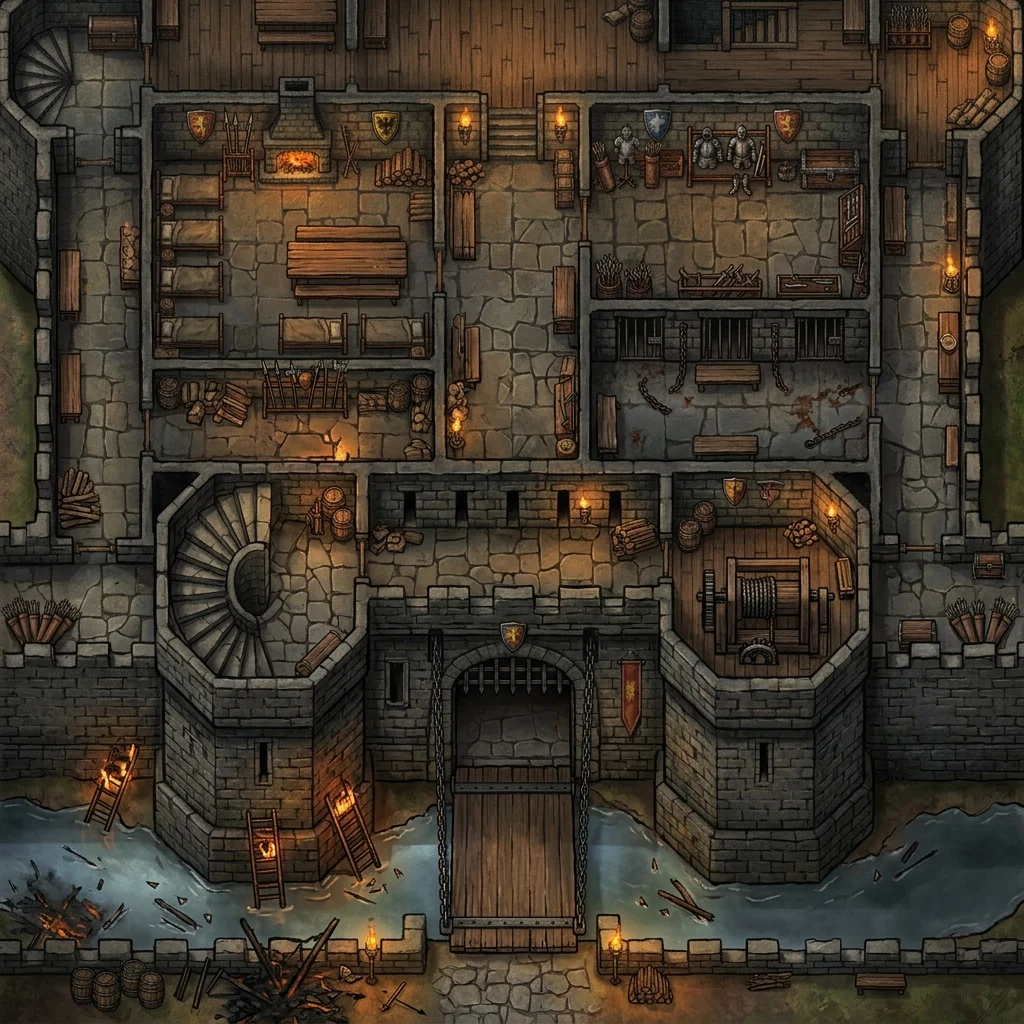
The description
“Castle gatehouse under siege, drawbridge half raised, burning ladders, murder holes”
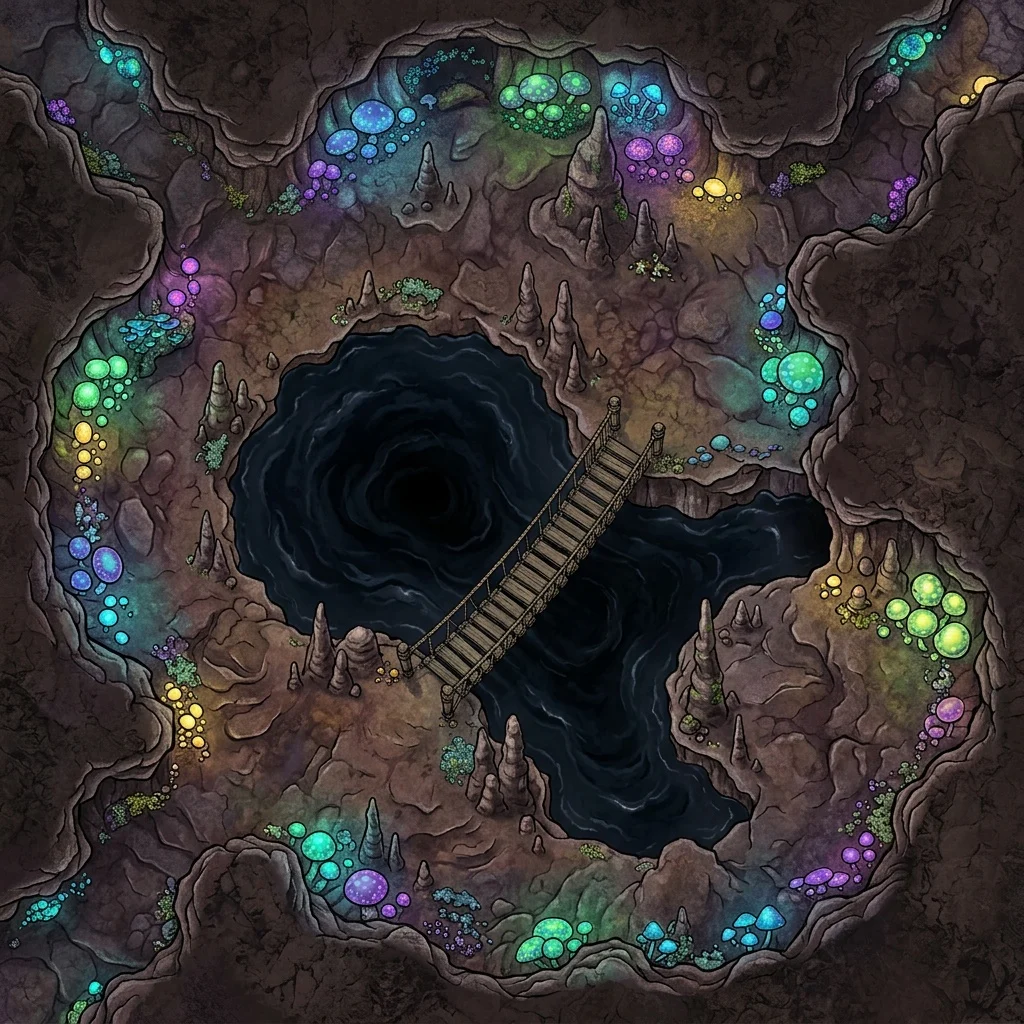
The description
“Underdark fungus cavern, glowing mushrooms, a rope bridge over a black lake”
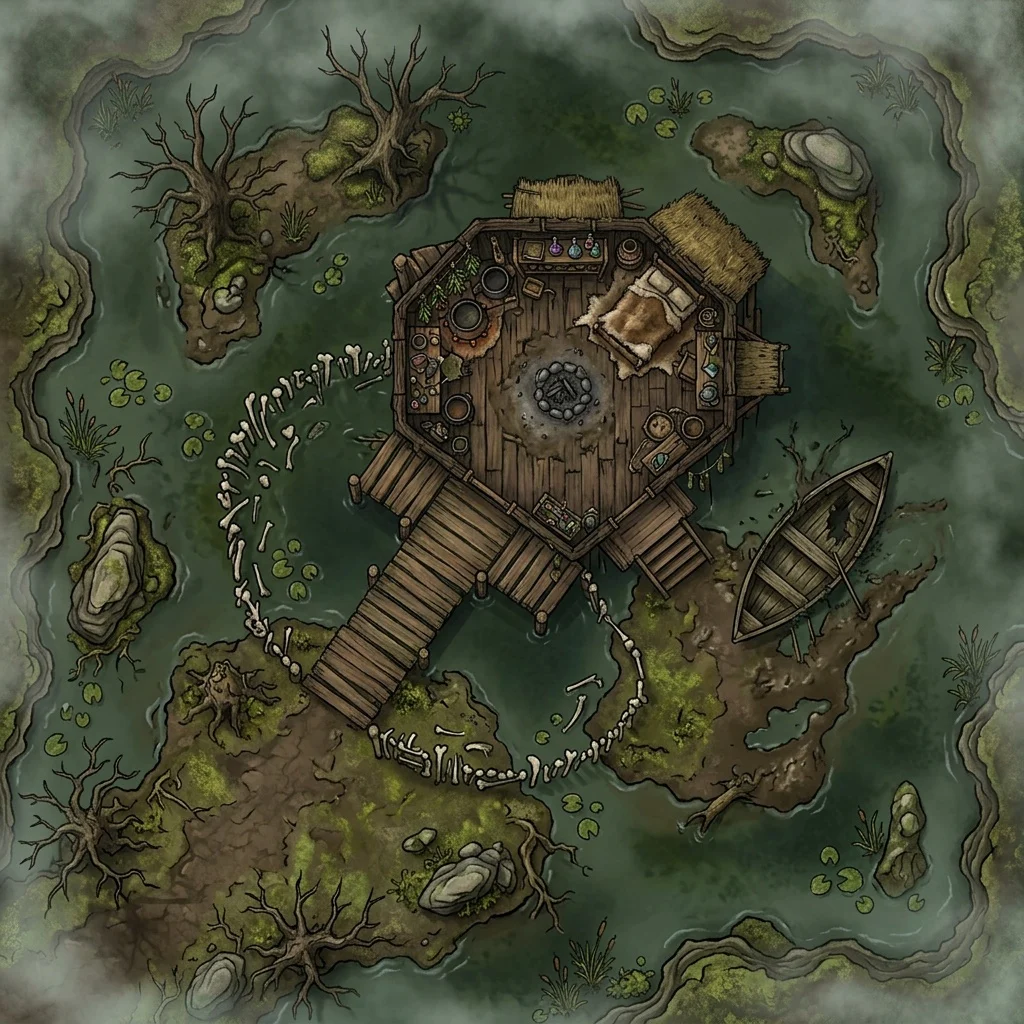
The description
“Hag’s hut on stilts in a misty marsh, bone fence, rotting rowboat”
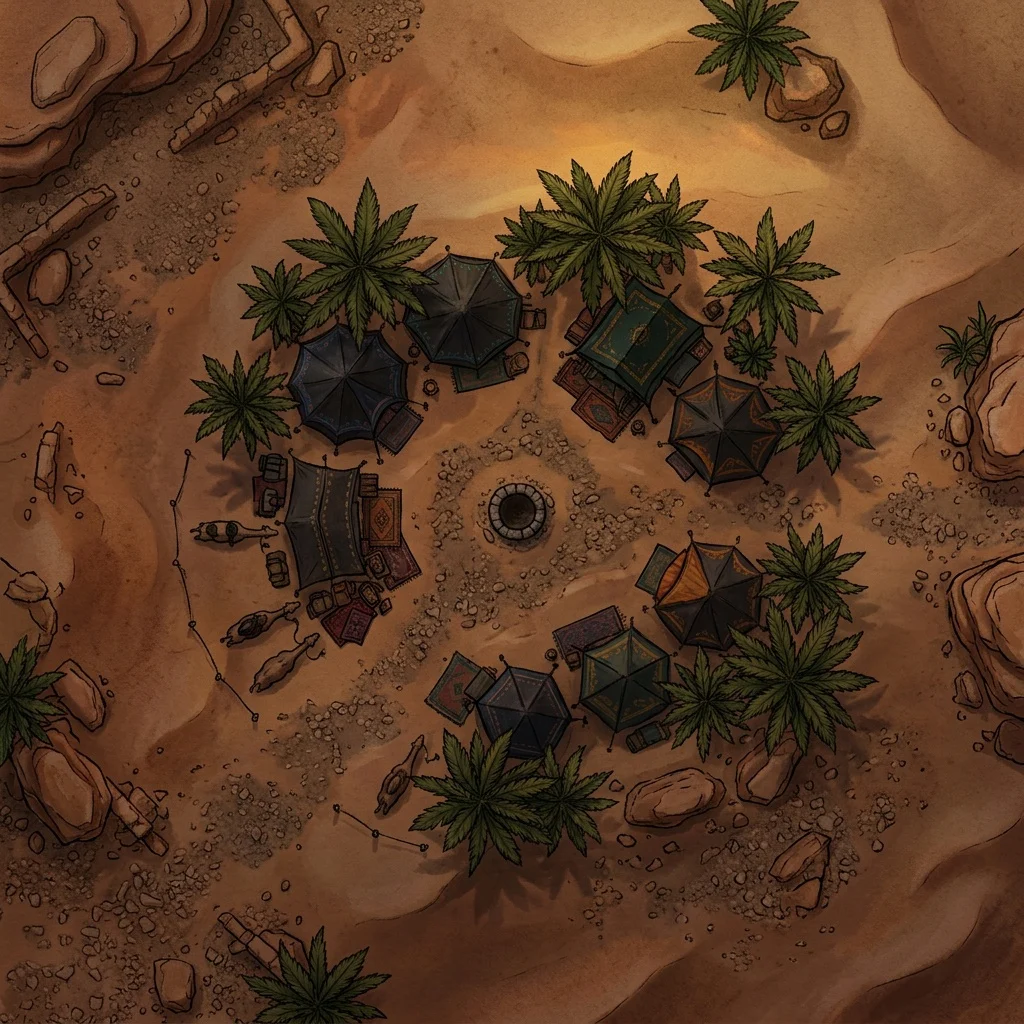
The description
“Desert caravan camp at dusk, tents around a dry well, palms, tethered camels”
The description
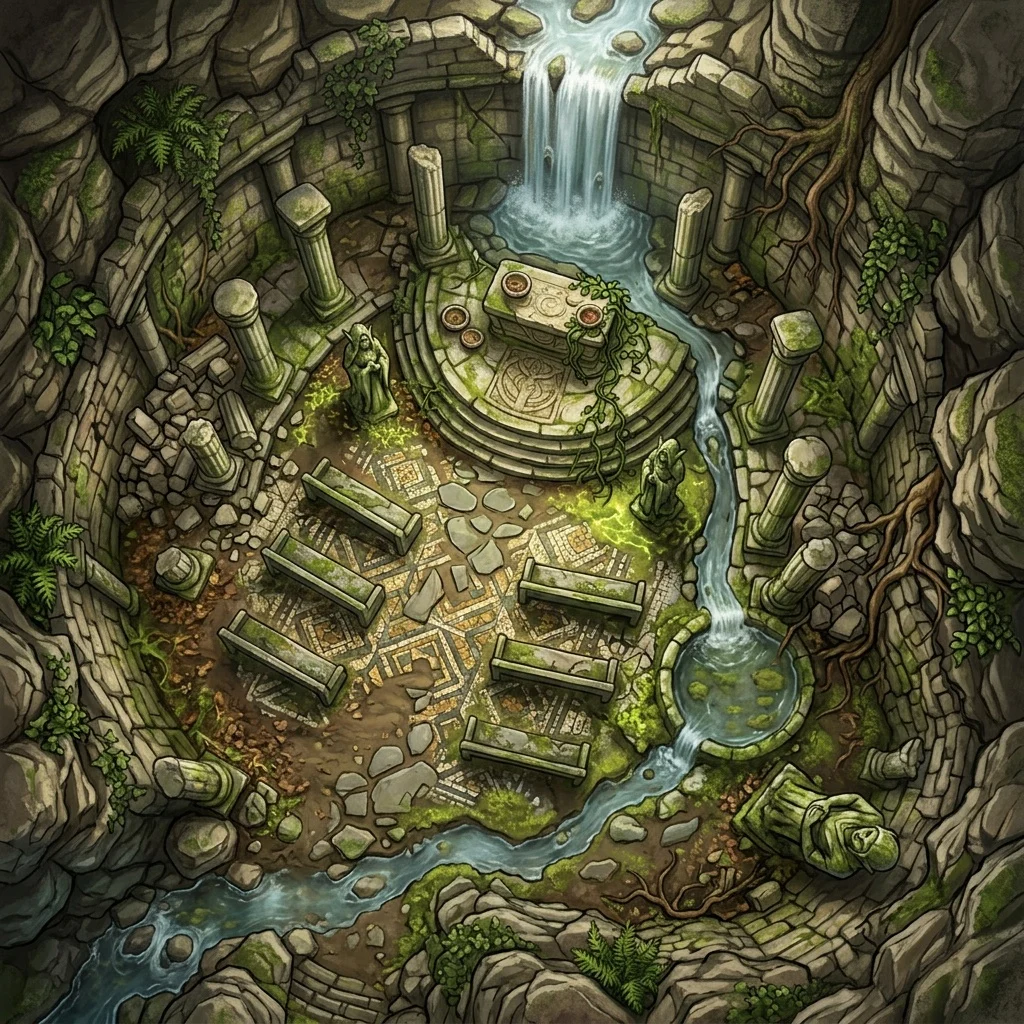
“Sunken elven shrine, waterfall pouring through the broken roof, mossy statues”
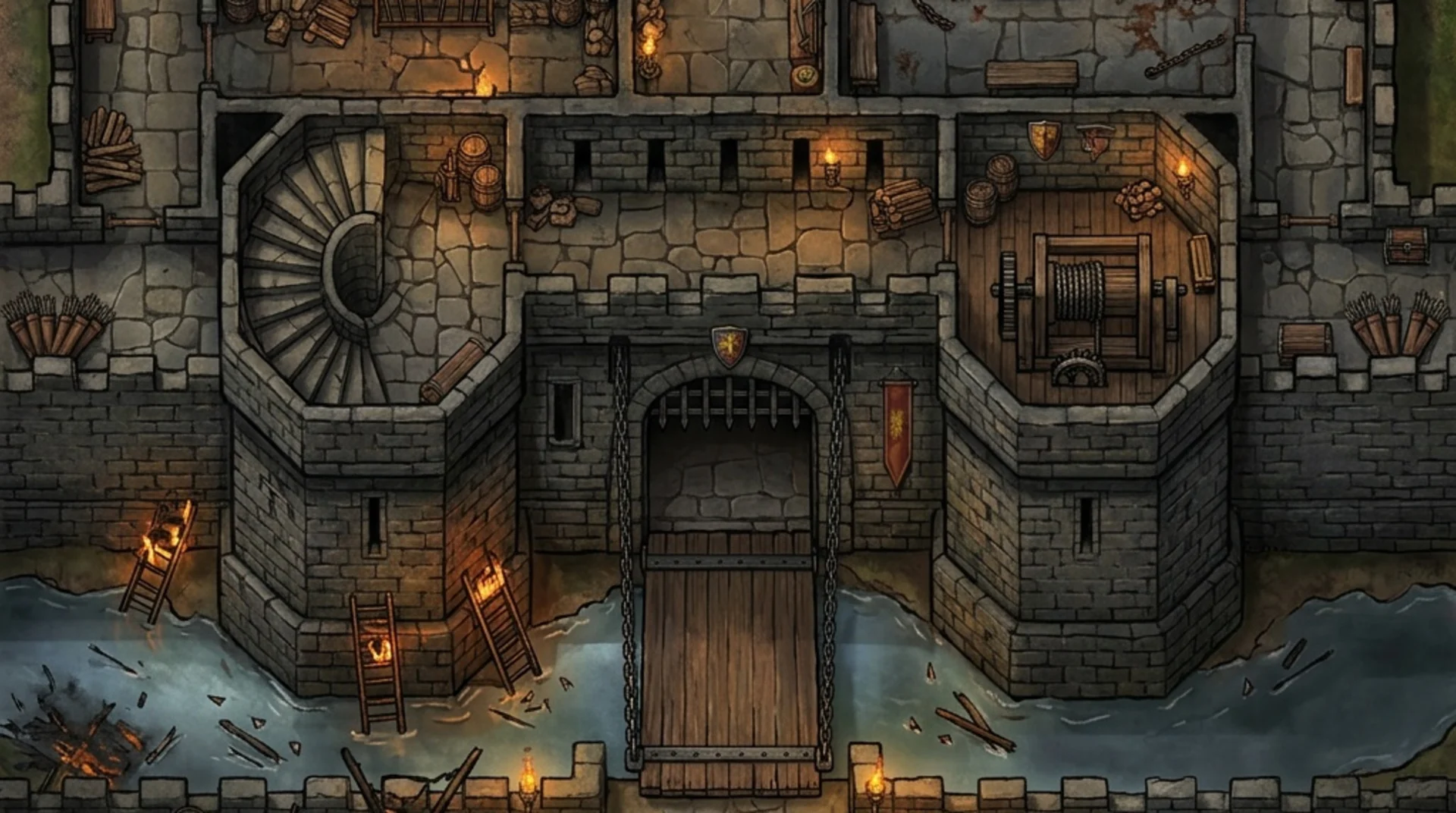
The wall the party has to get over, the gate they have to hold, the barracks behind it. Name the towers and the drawbridge and they land where you said.
Fungus forests, rope bridges over black water, stalagmites for cover. Say where the light comes from and the map carries it.
Stilt houses, rotting boardwalks, bone fences, and the one solid path through the mud. Difficult terrain is the whole fight, and you decide where it sits.
Toppled columns, altars under open sky, statues that might be more than statues. Say what still stands and the fight gets its cover.
Caravan camps around a dry well, dune ridges, a ruined waystation on the trade road. A few tents and palms turn open ground into a position worth defending.
The staples every campaign returns to. The D&D map generator page covers crypts, taverns, streets, ships, and boss arenas, with six more maps.
Write it the way you’d narrate it: the gatehouse, what’s burning, where the drawbridge sits. One sentence made each map above. More detail gives you more control.
Square for a chamber, Wide for a road, Cinematic for the set piece. 1K for quick prep, 2K when players zoom in, 4K for print. Painted, Gritty, or Ink to match the campaign.
Under a minute later the map is in your library as a standard image. Drag it onto your VTT page, or print it.
The first description on this page, exactly as typed
“Castle gatehouse under siege, drawbridge half raised, burning ladders, murder holes”
Every map runs through rules written for the table, so what comes back is something you can play on.
Flat and overhead, no tilt, so tokens sit square on the floor.
No people or creatures baked in. Your tokens are the only ones on the map.
No borders, titles, or compass roses to crop away. What you download goes straight on the table.
What you describe wins: the content, the lighting, the layout. Painted, Gritty, and Ink change how it’s drawn, and the scene stays yours.
Under the hood: current frontier image models, wrapped in map rules refined scene by scene since the first tavern.
5 free maps
when you sign up, no credit card
Under a minute
from description to finished map
Credits come back
automatically if a generation fails
Commercial use
allowed on every tier, including free
Any of them. A map is an image with no rules attached, so the same gatehouse works for D&D 5e, Pathfinder 2e, Daggerheart, Shadowdark, Dungeon Crawl Classics, Old-School Essentials, Dragonbane, Forbidden Lands, 13th Age, Savage Worlds, or your homebrew. Your VTT supplies the grid and your system supplies the rules.
No grid lines are drawn on the image. Roll20, Foundry VTT, and Owlbear Rodeo each overlay their own grid on an imported map, so you set the square size once in the VTT and nothing on the image fights the alignment.
Yes. The D&D map generator page shows six of them with their descriptions. This page covers the rest of the genre: castles, caverns, marshes, ruins, deserts, and the road between them.
Your first 5 maps are free at 1K resolution, with no credit card. After that, a 1K map costs 1 credit, 2K costs 2, and 4K costs 4. The monthly plan is $4 for 15 credits, rolling over up to 30, and a $3 pack adds 10 credits that never expire.
Yes. Commercial use is allowed on every tier, including the free one. Run paid sessions with them, put them in a module you sell, or print them for a convention table.
5 free maps, no credit card required.
Notify me at launch