Brief the crew on the deck. A top-down, gridless map is back before the airlock cycles.
Starfinder, Mothership, or anything with a hull
NeedAMap draws the deck you describe. Write the bridge, the docking ring, or the colony as you would brief the crew, and a top-down map comes back with the consoles, bulkheads, and cargo where you put them, ready for Roll20, Foundry VTT, Owlbear Rodeo, or the printer.
Sci-fi fights happen indoors more than any other genre: bridges, holds, reactor rooms, rings. Each map is one of those spaces at encounter scale, the size where a five-foot square is a real place to stand, and the same description box also handles a dust storm on Mars.
Five sci-fi maps from the library. Every one came from a single typed sentence, shown here word for word.
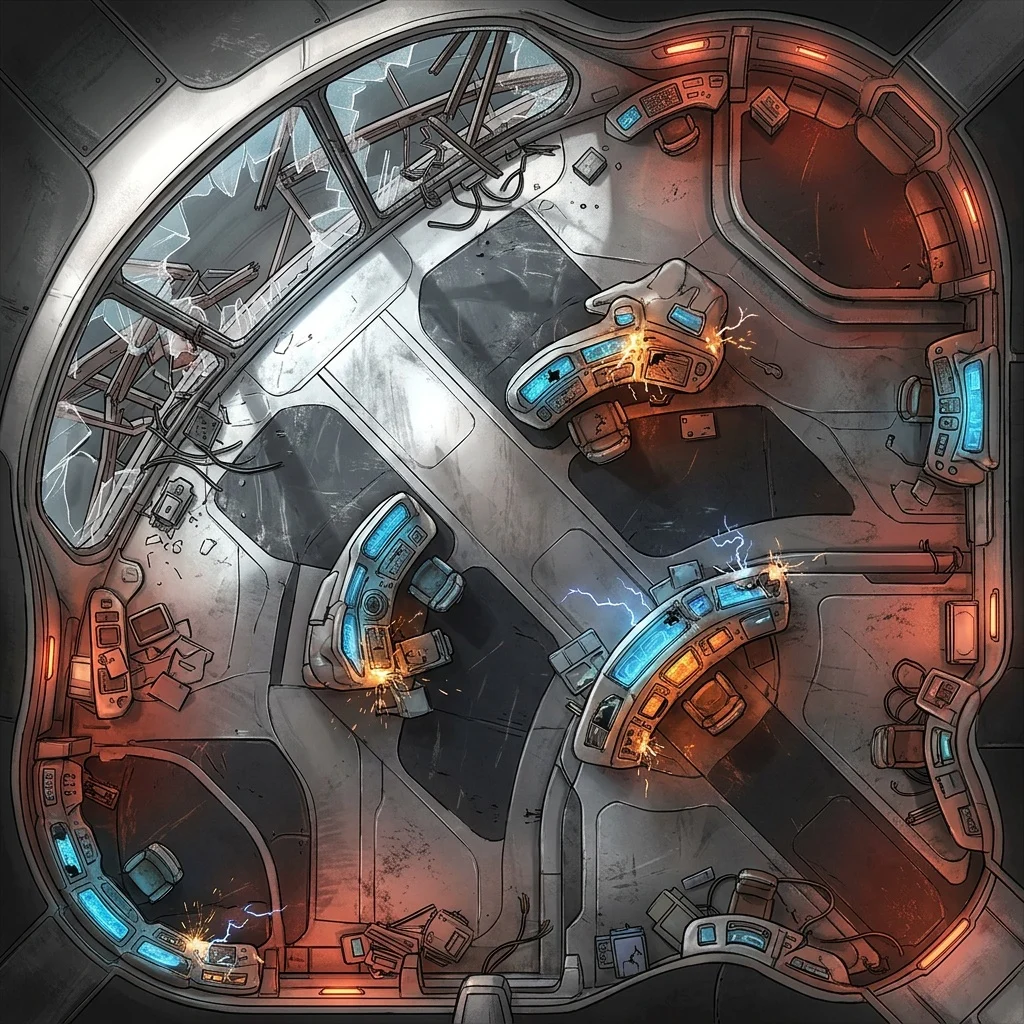
The description
“Starship bridge after a boarding, sparking consoles, shattered viewport, emergency lighting”
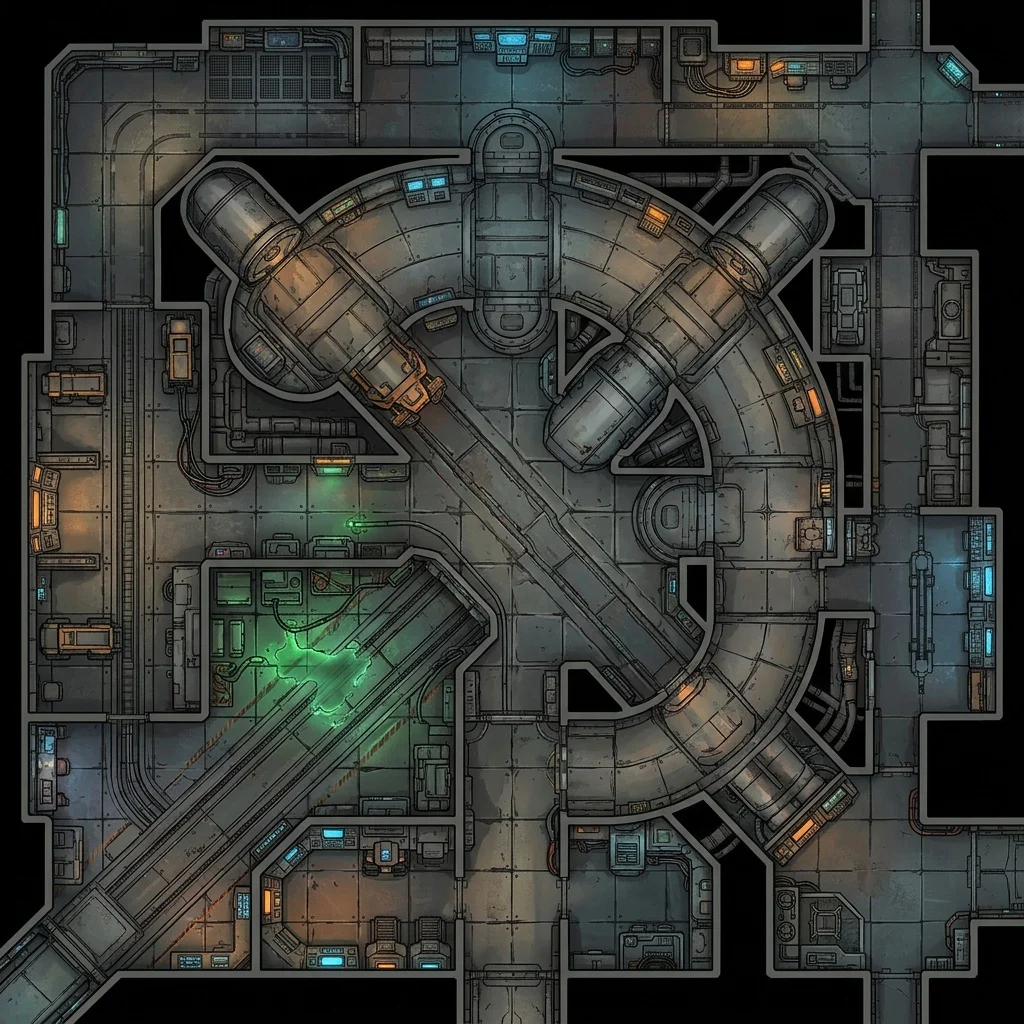
The description
“Space station docking ring, airlocks, cargo loaders, a leaking fuel line”
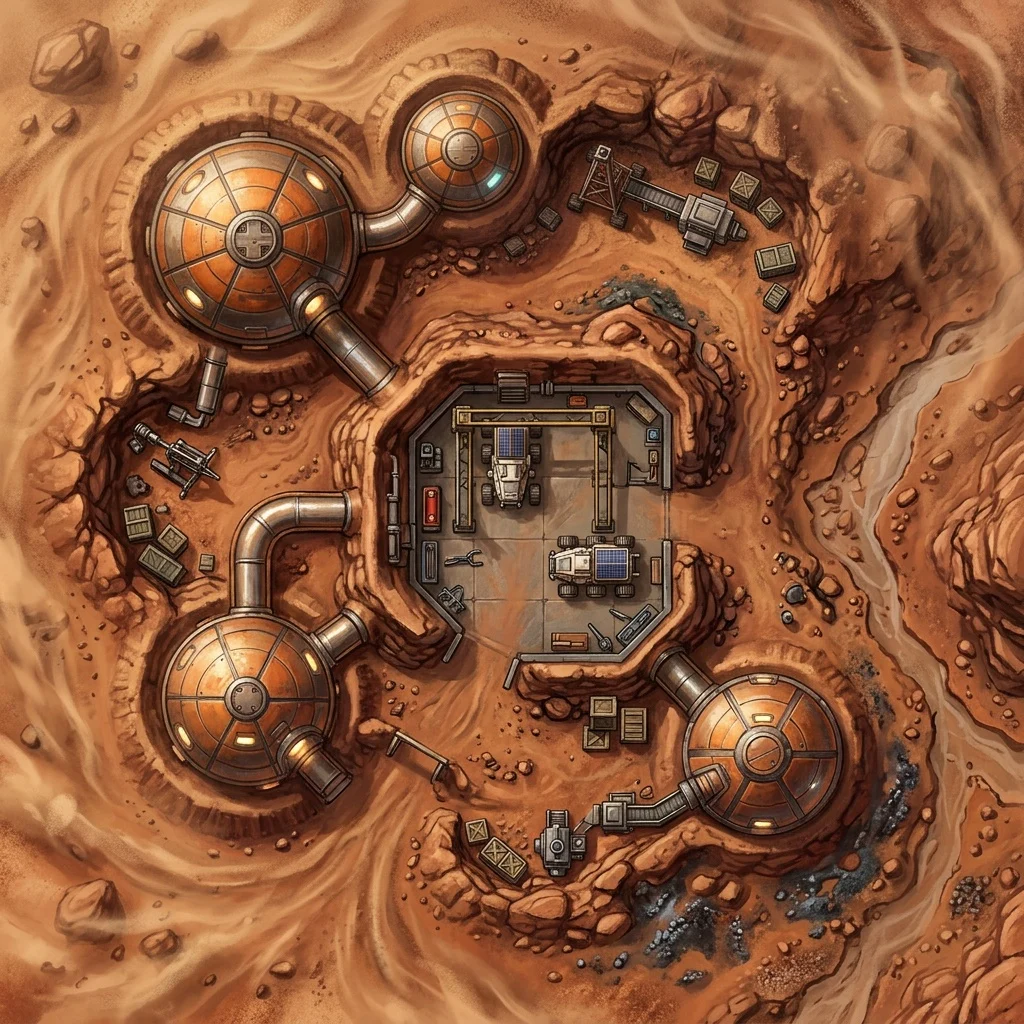
The description
“Mars mining colony, pressurized habitat domes, rover bay, dust storm outside”
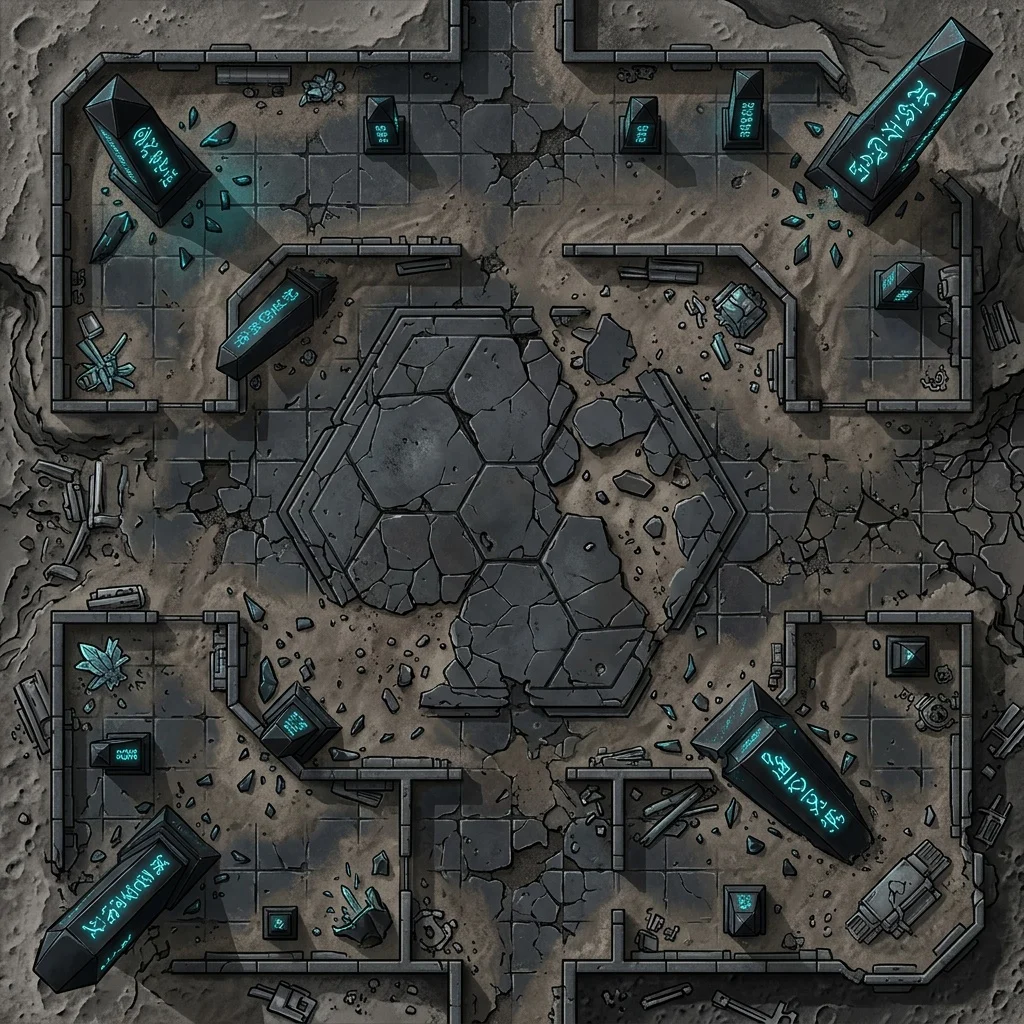
The description
“Alien ruins on a barren moon, black monoliths, glowing glyphs, cracked landing pad”
The description
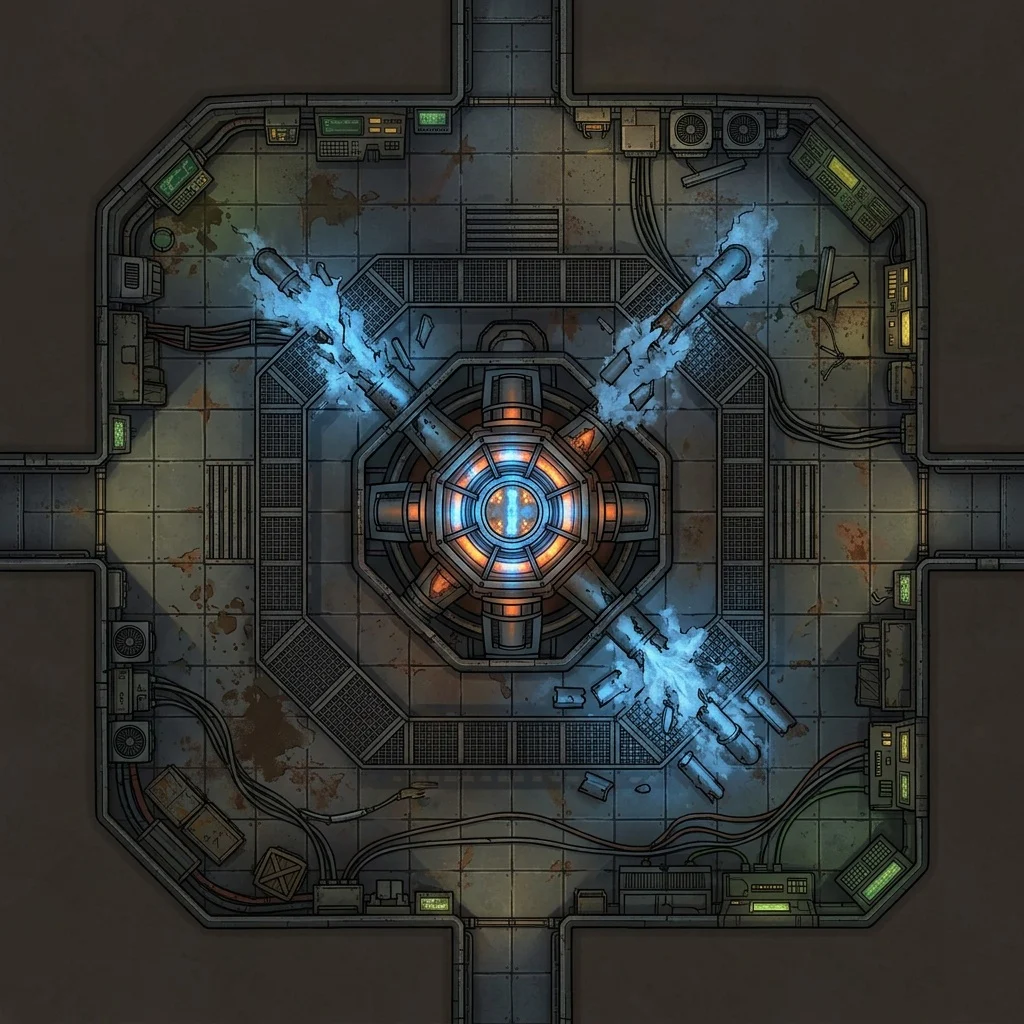
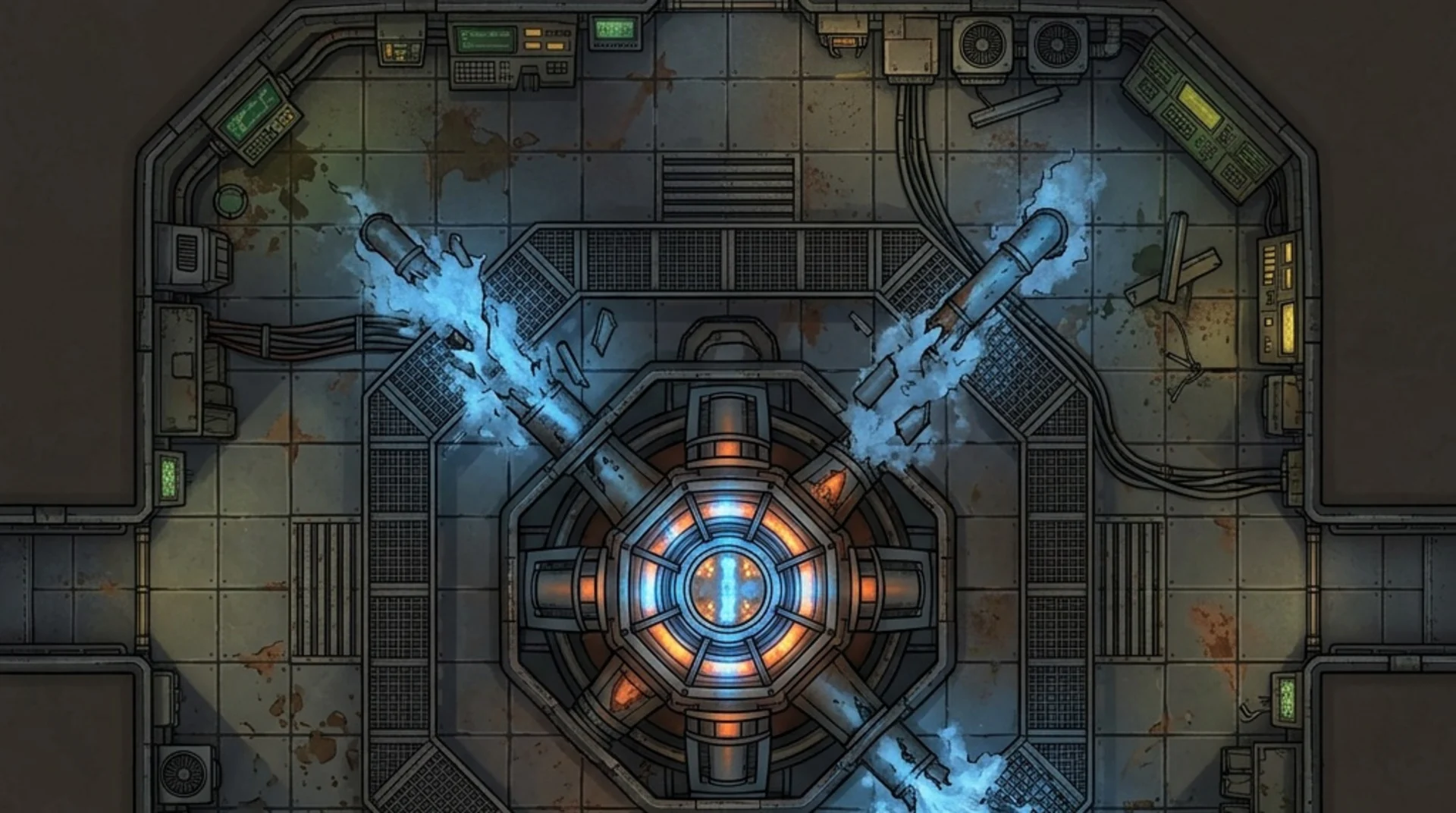
“Starship engine room, exposed reactor core, catwalks, ruptured coolant pipes”
The command deck after a boarding, the corridor to the escape pods, the hold where the cargo turns out to be alive. Name the consoles and the damage and they land where you said.
Airlocks, cargo loaders, and the leaking fuel line nobody reported. Stations give a fight its chokepoints, so say which hatches are open.
Pressurized domes, rover bays, and the storm outside the glass. Describe what the colony does and the map fills in the working parts.
Monoliths, glyphs, cracked landing pads, and ground that was never meant for boots. Say what glows and what is broken.
Catwalks over a reactor core, coolant pipes, and stacked containers with lanes between them. Cover is the whole fight below decks, so name it.
Cyberpunk is its own genre here. The cyberpunk battle maps page covers street level: lobbies, night markets, rooftops, and clinics.
Write it the way you’d narrate it: the bridge, what’s sparking, where the viewport gave way. One sentence made each map above. More detail gives you more control.
Square for a room, Wide for a road, Cinematic for the set piece. 1K for quick prep, 2K when players zoom in, 4K for print. Painted, Gritty, or Ink to match the campaign.
Under a minute later the map is in your library as a standard image. Drag it onto your VTT page, or print it.
The first description on this page, exactly as typed
“Starship bridge after a boarding, sparking consoles, shattered viewport, emergency lighting”
Every map runs through rules written for the table, so what comes back is something you can play on.
Flat and overhead, no tilt, so tokens sit square on the floor.
No people or creatures baked in. Your tokens are the only ones on the map.
No borders, titles, or compass roses to crop away. What you download goes straight on the table.
What you describe wins: the content, the lighting, the layout. Painted, Gritty, and Ink change how it’s drawn, and the scene stays yours.
Under the hood: current frontier image models, wrapped in map rules refined scene by scene since the first tavern.
5 free maps
when you sign up, no credit card
Under a minute
from description to finished map
Credits come back
automatically if a generation fails
Commercial use
allowed on every tier, including free
One deck or one section at a time. Every map is encounter scale, so describe the bridge, then the engine room, then the cargo hold, and run the boarding deck by deck. Each stays in your library.
Yes. No grid is drawn on the image, so your VTT overlays whichever grid your system uses and the map does not argue with it.
Say so in the description. Lighting you describe is drawn as described, so “red emergency lighting” or “lit only by the reactor glow” changes the map, and the image stays readable on a VTT.
No grid lines are drawn on the image. Roll20, Foundry VTT, and Owlbear Rodeo each overlay their own grid on an imported map, so you set the square size once in the VTT and nothing on the image fights the alignment.
Your first 5 maps are free at 1K resolution, with no credit card. After that, a 1K map costs 1 credit, 2K costs 2, and 4K costs 4. The monthly plan is $4 for 15 credits, rolling over up to 30, and a $3 pack adds 10 credits that never expire.
Yes. Commercial use is allowed on every tier, including the free one. Run paid sessions with them, put them in a module you sell, or print them for a convention table.
5 free maps, no credit card required.
Notify me at launch