One tool for the D&D campaign, the Call of Cthulhu one-shot, and the Starfinder heist. Describe the scene and the map comes back in under a minute.
A TTRPG map maker (also searched as a tabletop RPG map generator or an RPG battle map creator) builds encounter maps for tabletop roleplaying games from a written description. NeedAMap draws the scene in whatever genre you describe, so the same tool covers a Pathfinder dungeon on Tuesday and a Delta Green warehouse raid on Friday, at 1K, 2K, or 4K, ready for Roll20, Foundry VTT, Owlbear Rodeo, or print.
The genre comes from your words. Describe bulkheads and emergency lighting and you get a station; describe a hearth and a barrel-lined bar and you get a tavern. Everything comes back at encounter scale, one location at a time, drawn straight down so tokens sit flat on it.
Maps from the NeedAMap library, each with the exact description that made it.
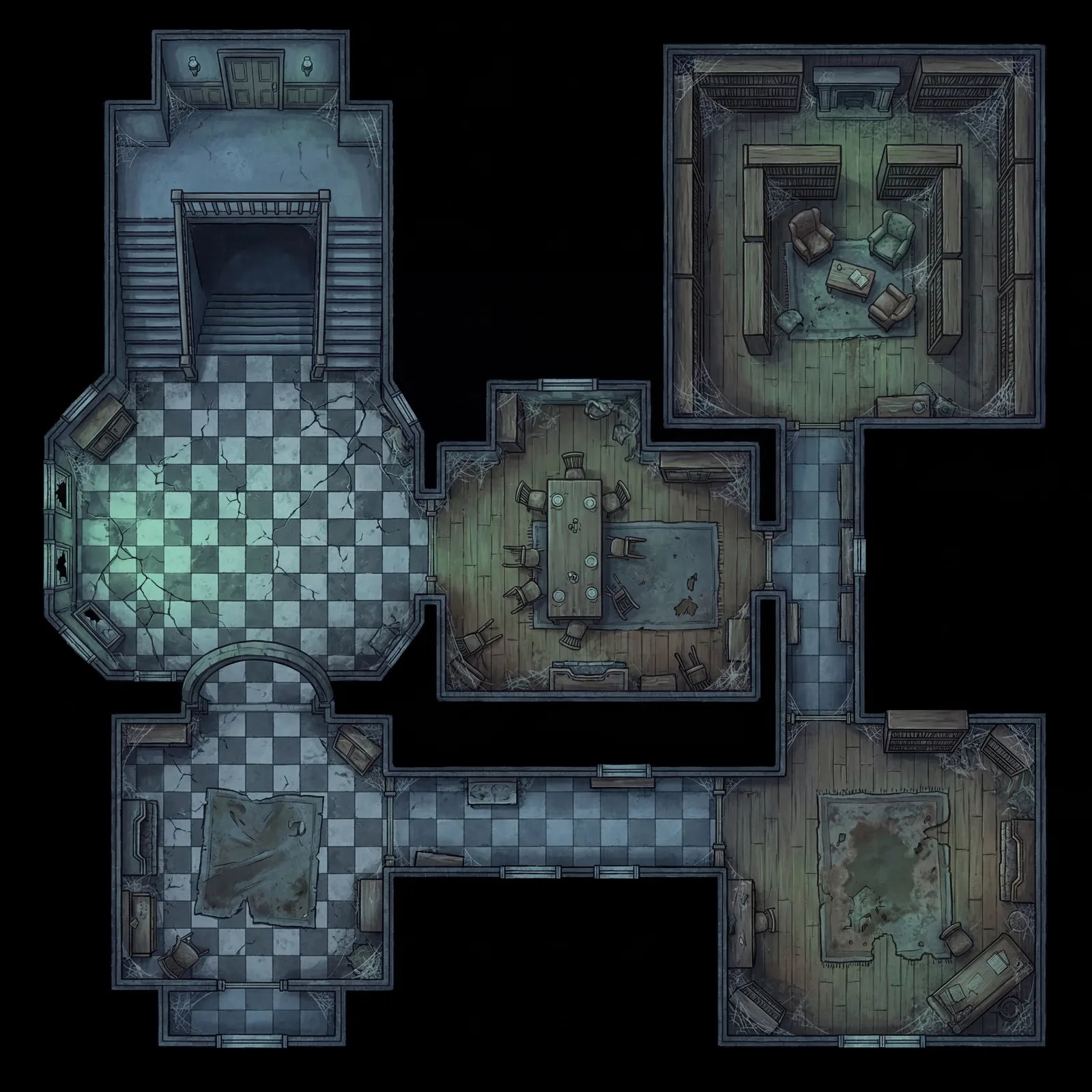
The description
“A decaying large Victorian manor with 5 large connected rooms, a grand entrance foyer with a cracked checkerboard tile floor and a wide staircase leading up to a landing with two doors, connected through an archway to a dining room with a long table that could serve as cover and toppled chairs blocking movement, a narrow servants hallway connects to a library with tall bookshelves forming a mini maze with a reading area in the center, cobwebs throughout, broken windows in the foyer creating alternate entry points, dim moonlight mixed with faint green glow, cold muted blues and greys”
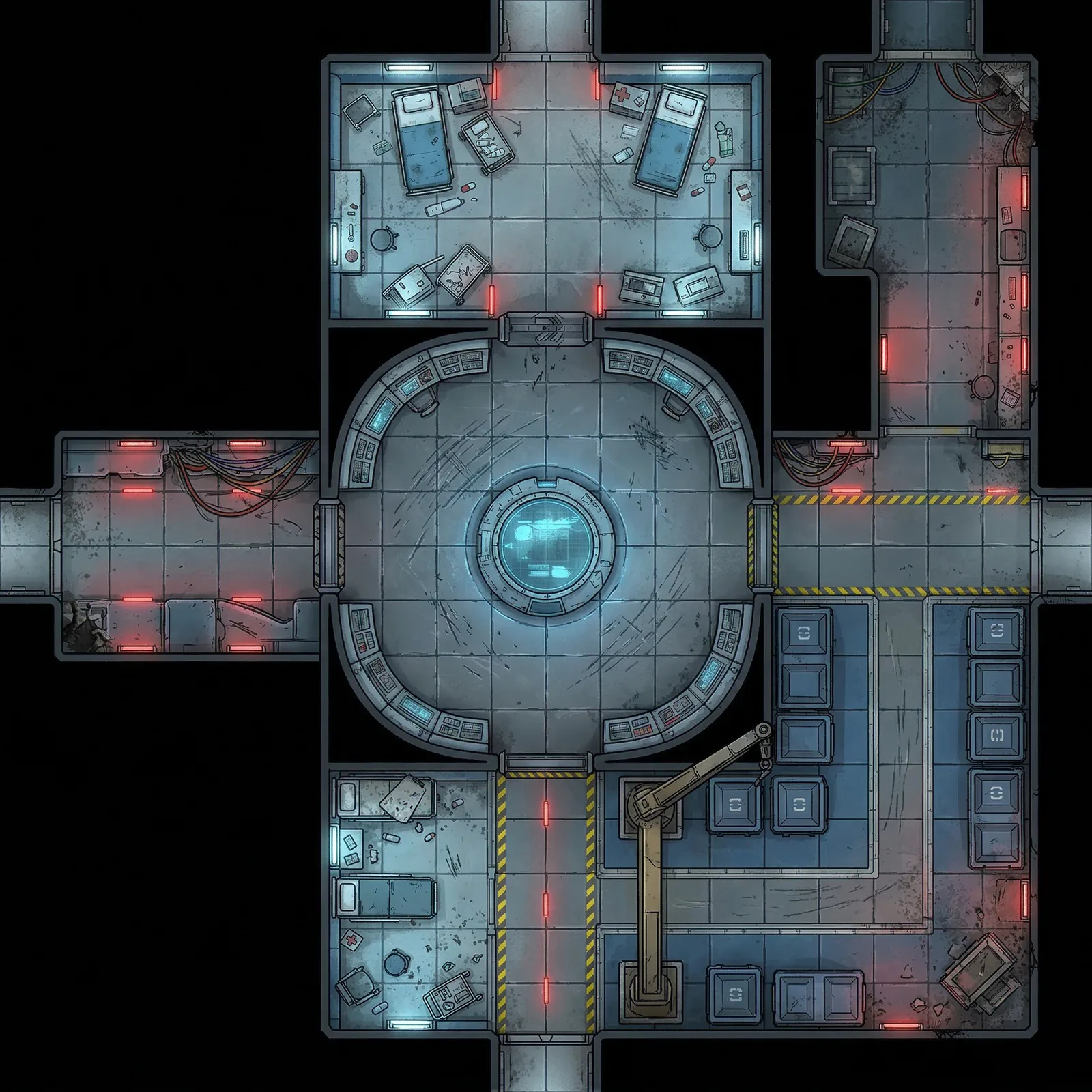
The description
“Interior of a derelict space station with three connected sections, a central command hub with a circular holographic display table in the middle and control consoles along the curved walls providing cover, connected through a heavy bulkhead door to a medical bay with two examination beds and overturned equipment carts, an airlock corridor with yellow hazard floor striping connects to a cargo bay with large magnetic crates arranged in rows creating lanes of movement and a loading crane arm, exposed wiring from ceiling panels, emergency red lighting strips along floors mixing with flickering white overhead lights, steel grey and clinical blue with warning red accents. No labels or text on the map”
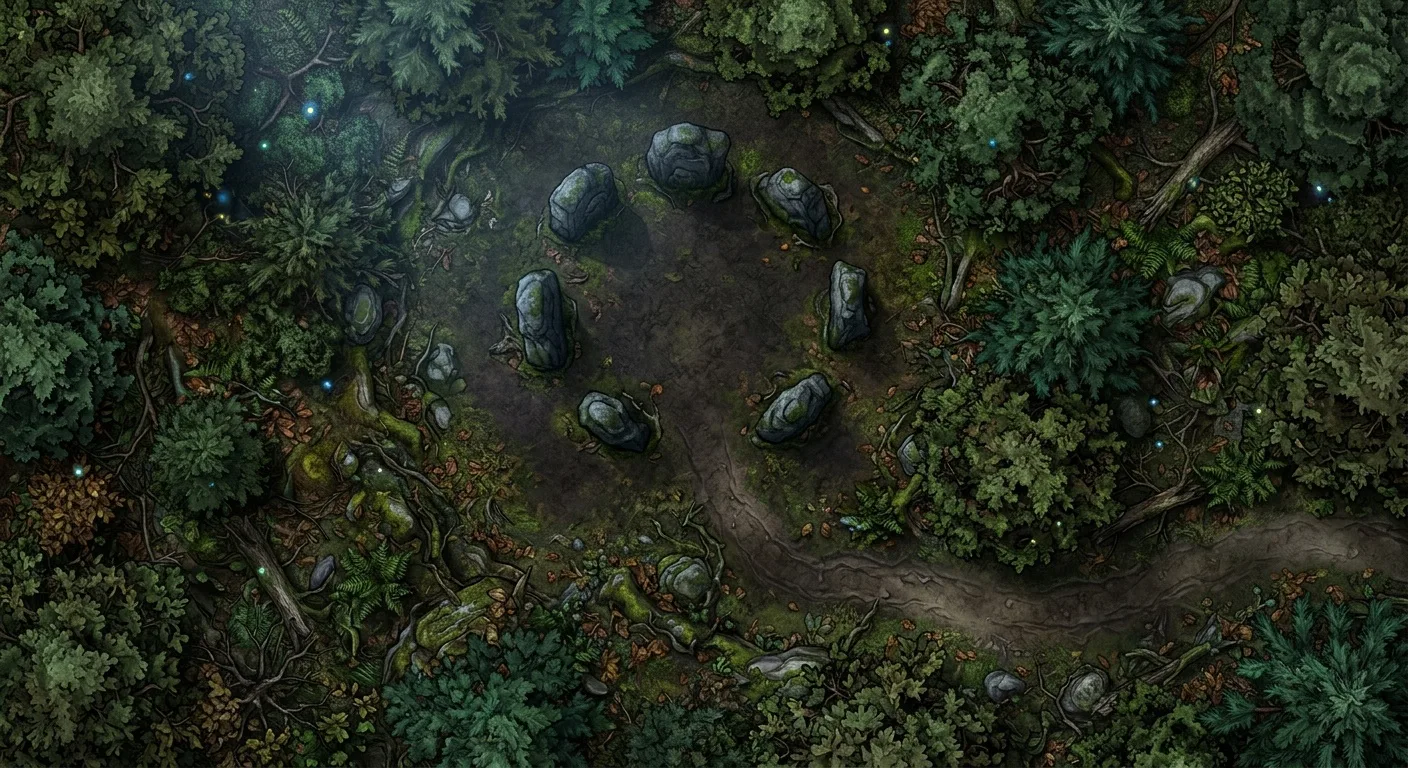
The description
“Moonlit forest clearing with ancient standing stones in a rough circle. Dense trees surround the clearing, a dirt path enters from the south. Fallen leaves and moss cover the ground, fireflies visible in the dim light”
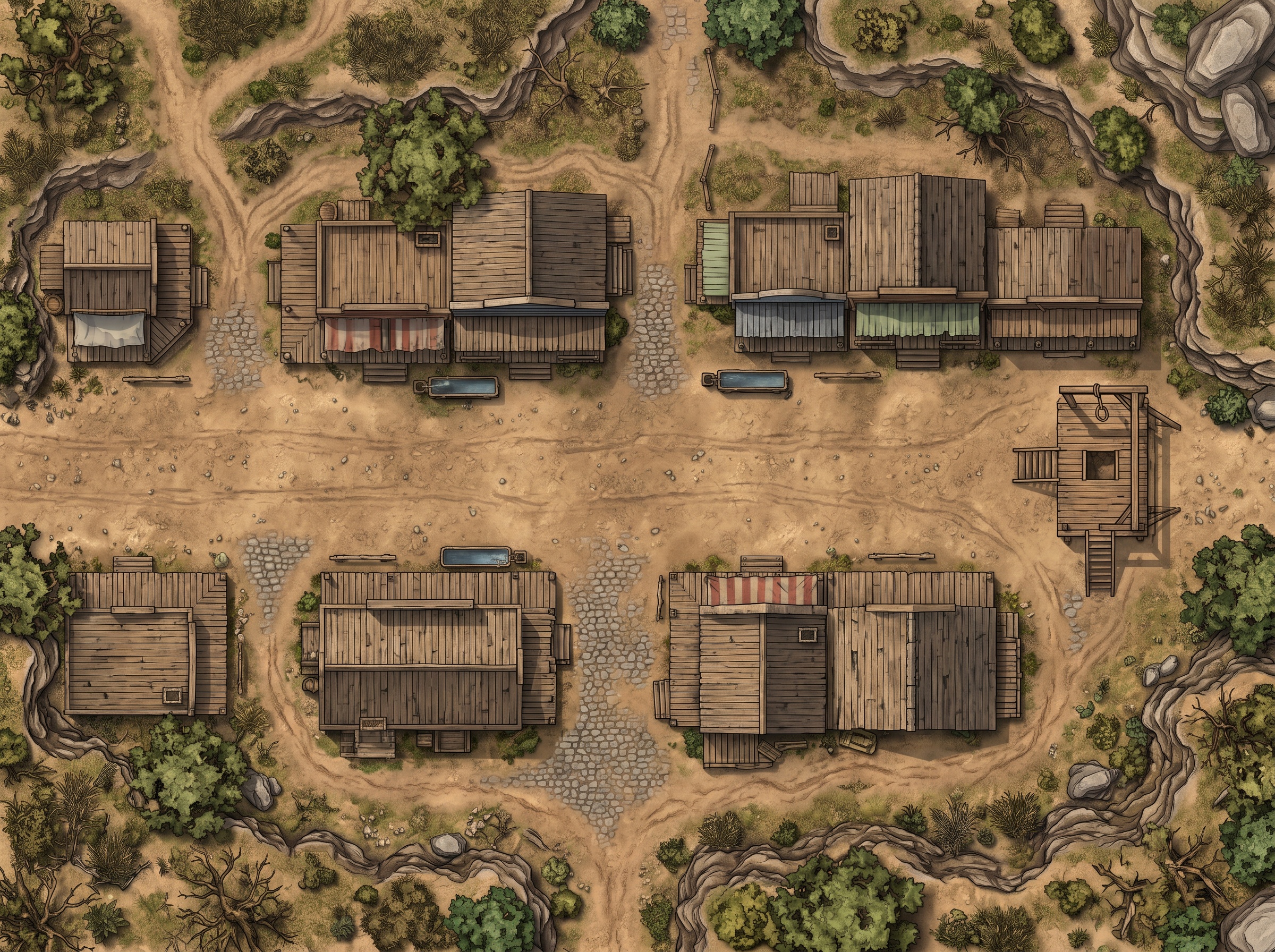
The description
“A single large dirt main street lined by roofed storefronts, water troughs, and a gallows on one end, western themed”
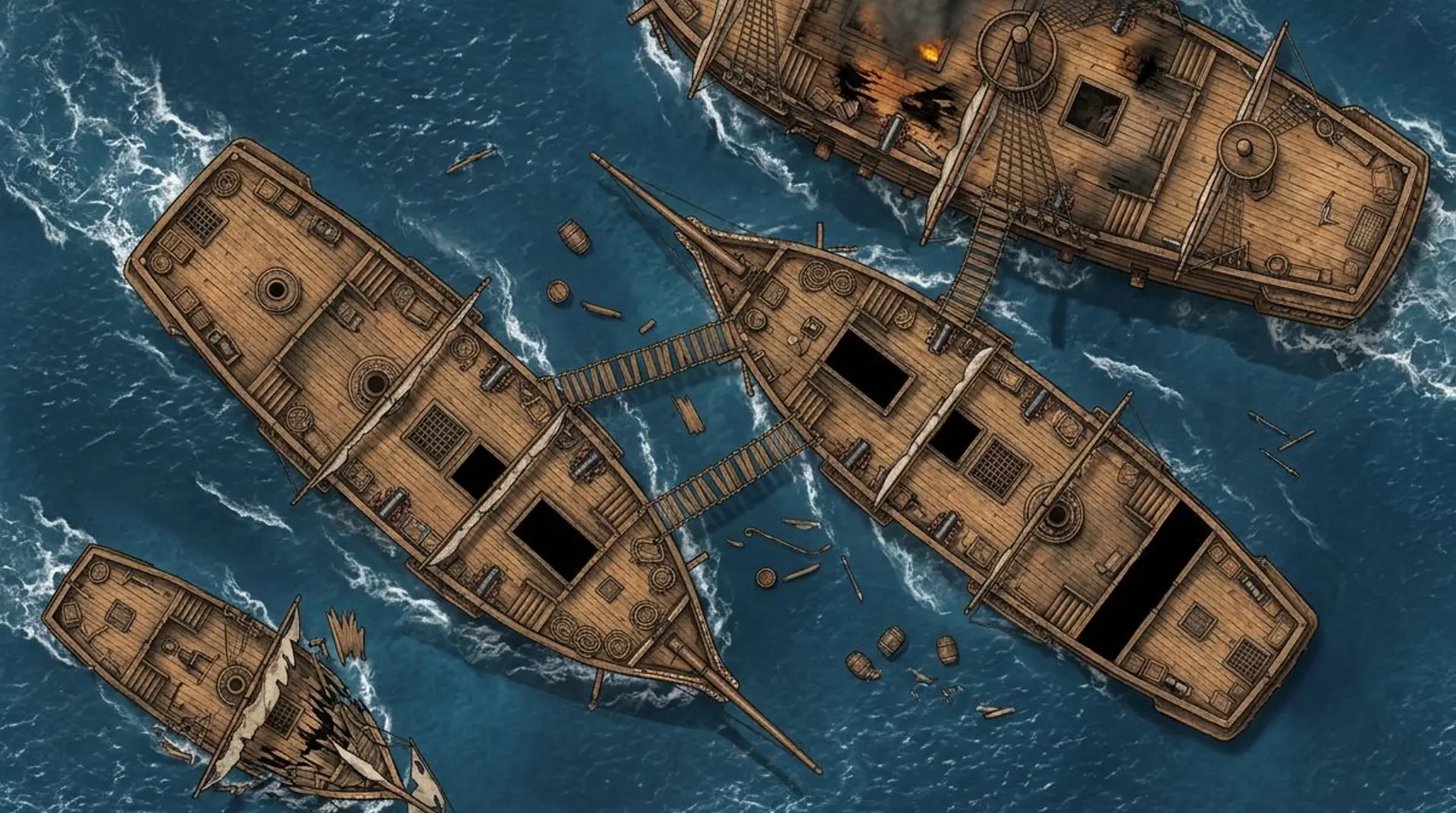
Dungeons, taverns, forests, castles, and ships for D&D and Pathfinder tables. The D&D map generator page shows four more.
Starship interiors, derelict stations, cargo bays, and alien outposts for Starfinder or Mothership. Describe the bulkheads and the emergency lighting, and the map comes back with lanes of cover between the crates.
Decaying manors, ritual chambers, graveyards, and the basement nobody should go into, for Call of Cthulhu or a gothic D&D campaign. Dim light and broken windows are part of the description, so they’re part of the map.
Saloons, main streets, canyon passes, and the stagecoach that didn’t make it, for Deadlands or any six-gun campaign. The water troughs and the gallows land where you put them.
Warehouses, motels, and subway platforms for Delta Green or a present-day heist. The loading dock and the parked cars are cover, so say where they are.
Neon streets, rain-slicked alleys, and whatever your homebrew setting looks like. Steampunk and post-apocalyptic scenes work the same way: describe it, and the map follows the words.
Write it the way you’d describe it to your players, in whatever genre the session is in. The words carry the setting, so a saloon and a starship bay use the same box.
Choose Square, Wide, Tall, or Cinematic to match the space, then 1K for quick prep, 2K for detail that survives zooming, or 4K for print. Painted, Gritty, and Ink are the three art styles.
The map lands in under a minute as a standard high-resolution image. It goes straight onto the map layer in Roll20, Foundry, or Owlbear Rodeo, or to the printer for the in-person table.
A real description from the example gallery
“Midnight graveyard, iron gate, tombstones and mausoleums, dead trees, ground fog, full moon”
5 free maps
when you sign up, no credit card
Under a minute
from description to finished map
Credits come back
automatically if a generation fails
Commercial use
allowed on every tier, including free
Yes. A map is an image with no rules baked in, so it works the same for Pathfinder, Call of Cthulhu, Starfinder, or a homebrew system. Import it into any virtual tabletop or print it.
Fantasy, sci-fi, horror, western, and modern are the core five, plus cyberpunk, steampunk, post-apocalyptic, and anything else you can describe. The genre comes from your words.
Yes. Describe the location the way you’d describe it to your players, including the details that make your setting yours, and the map follows the description.