Set the scene the way you’d set the mood. A top-down, gridless map comes back in under a minute.
Call of Cthulhu, Delta Green, or any table that dims the lights
Horror is about the room before anything walks into it. Describe the ward, the lighthouse, or the square as your investigators would find it, and NeedAMap draws it from above with the trail on the floor, the boarded doors, and the candles still burning, ready for Roll20, Foundry VTT, Owlbear Rodeo, or print.
Every map is one place at encounter scale, so the dread has somewhere to sit: a padded cell, a rock the storm owns, a chapel the woods have taken back. Describe what was left behind and the map tells the story before anyone speaks.
Five horror maps from the library, each shown with the sentence that made it.
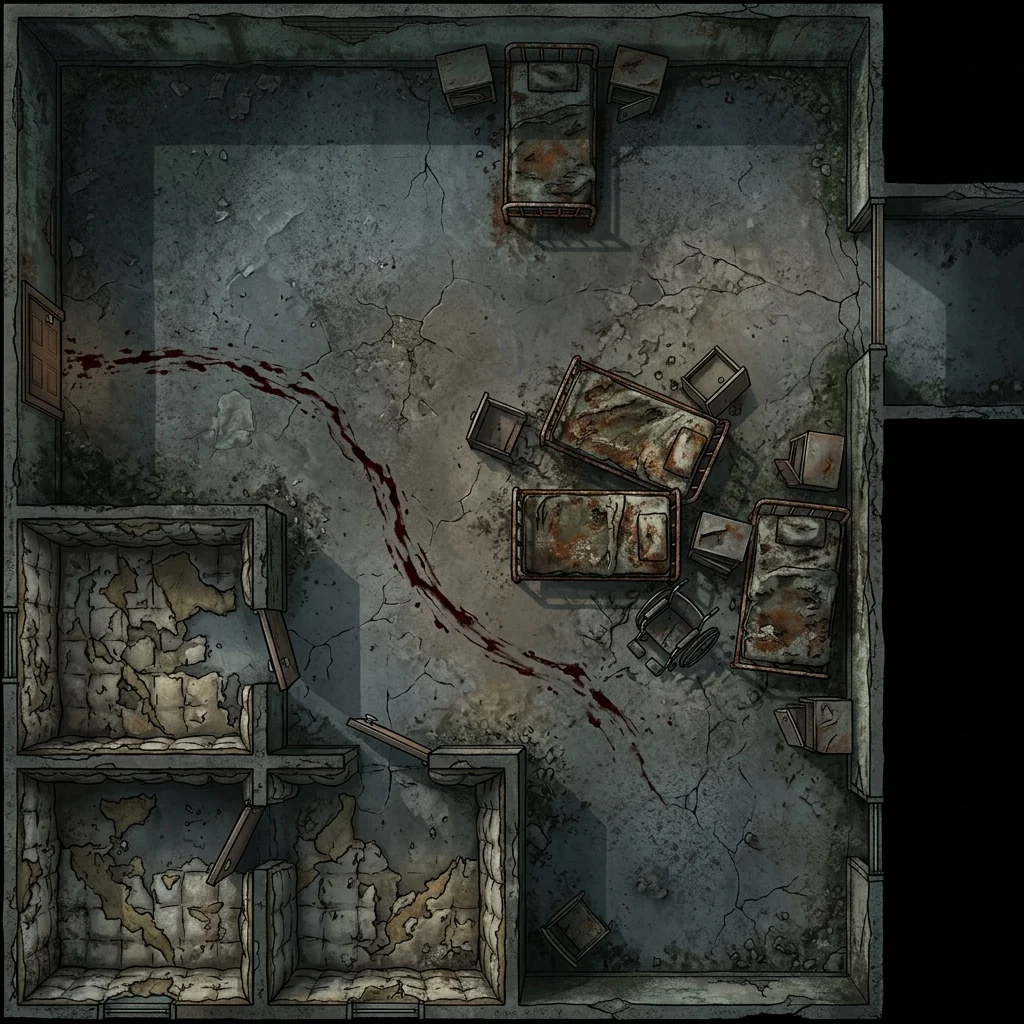
The description
“Abandoned asylum ward, rusted beds, padded cells, a blood trail down the hall”
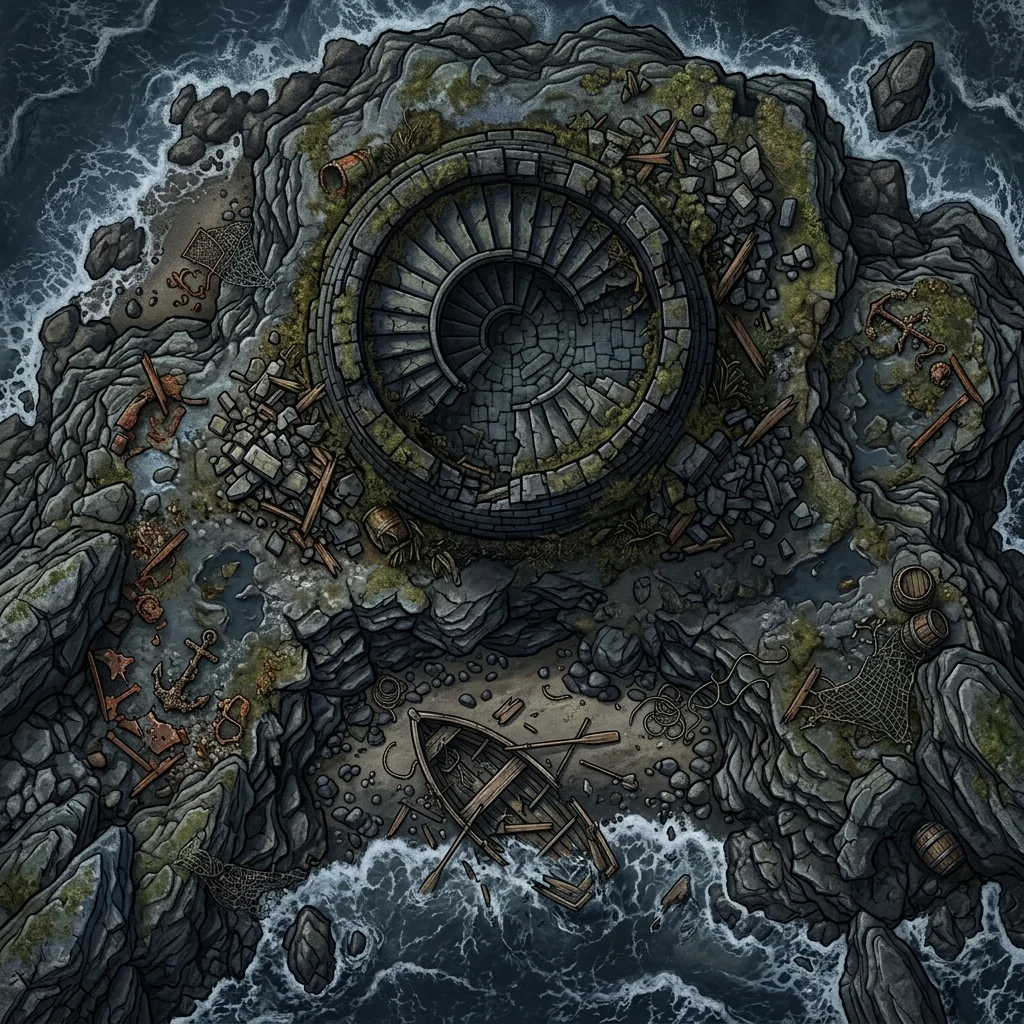
The description
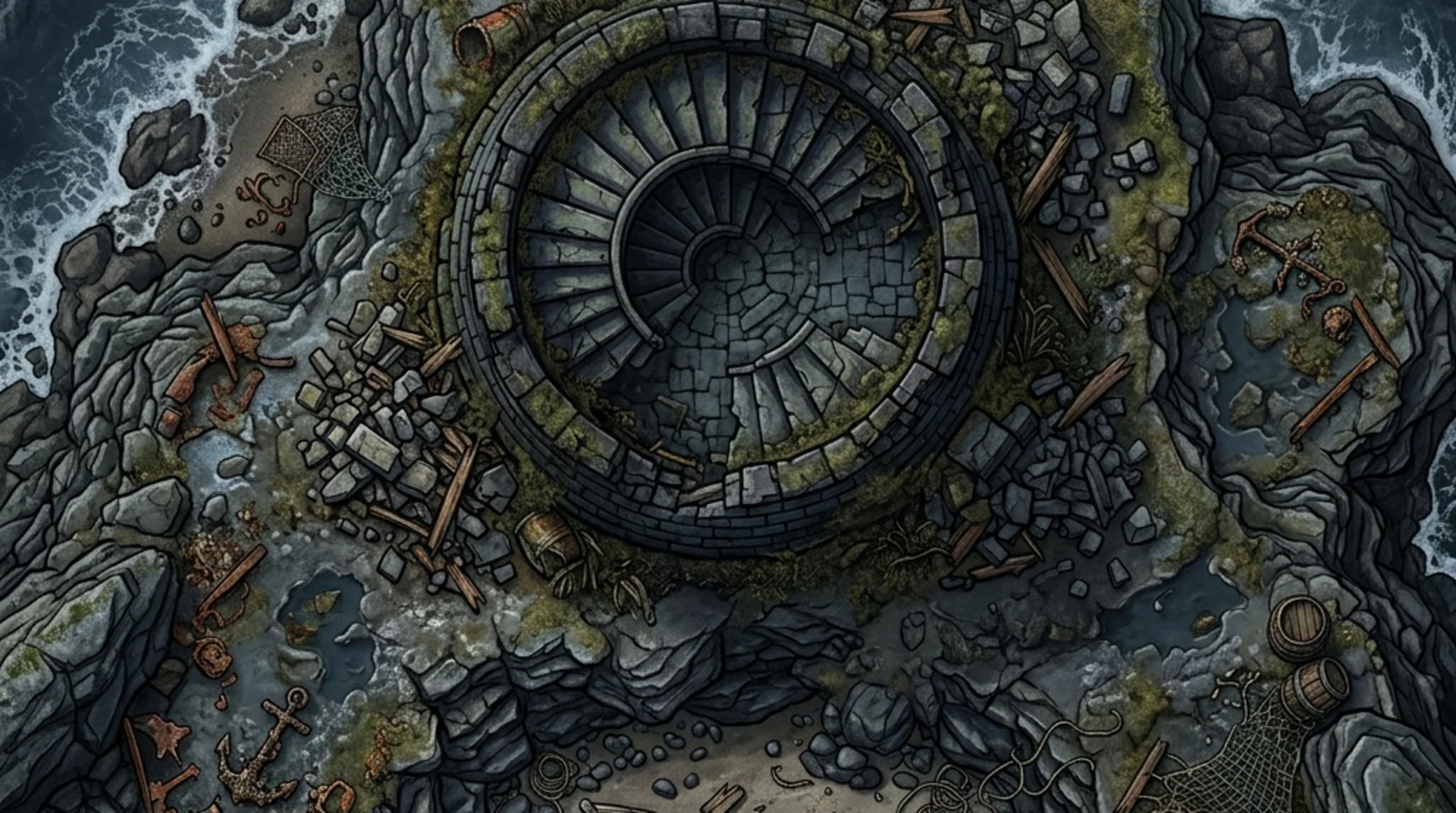
“Cursed lighthouse on a storm-lashed rock, spiral stairs, a wrecked rowboat”
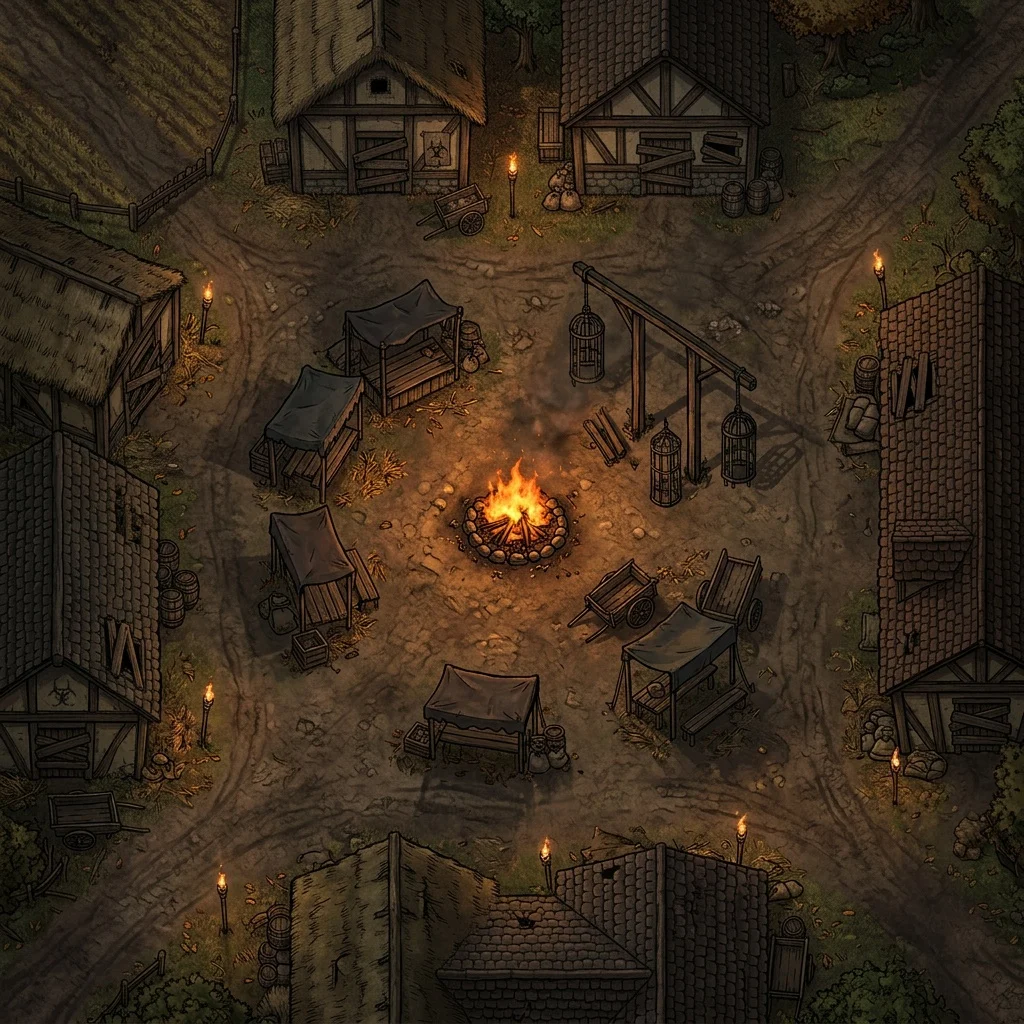
The description
“Plague village square at night, boarded doors, a burning pyre, hanging cages”
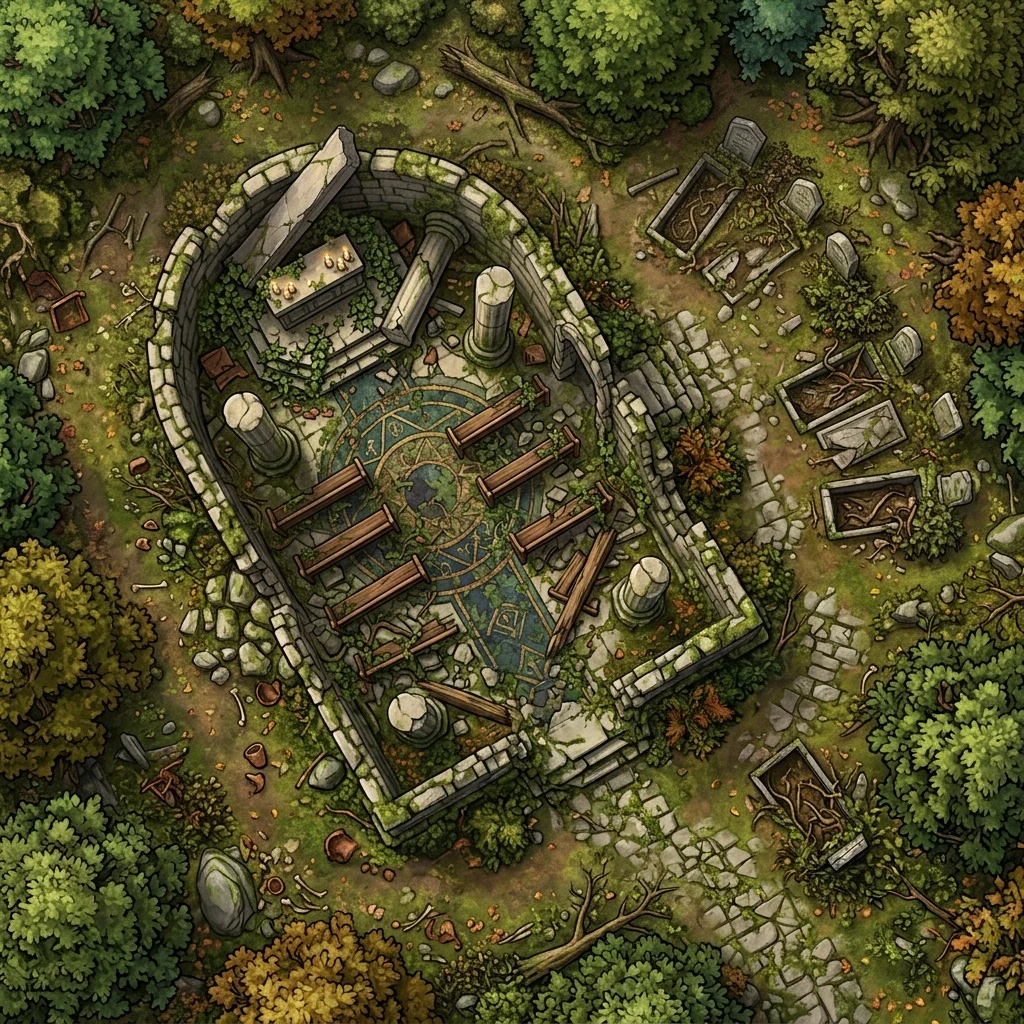
The description
“Overgrown chapel deep in the woods, collapsed roof, open graves, candles still lit”
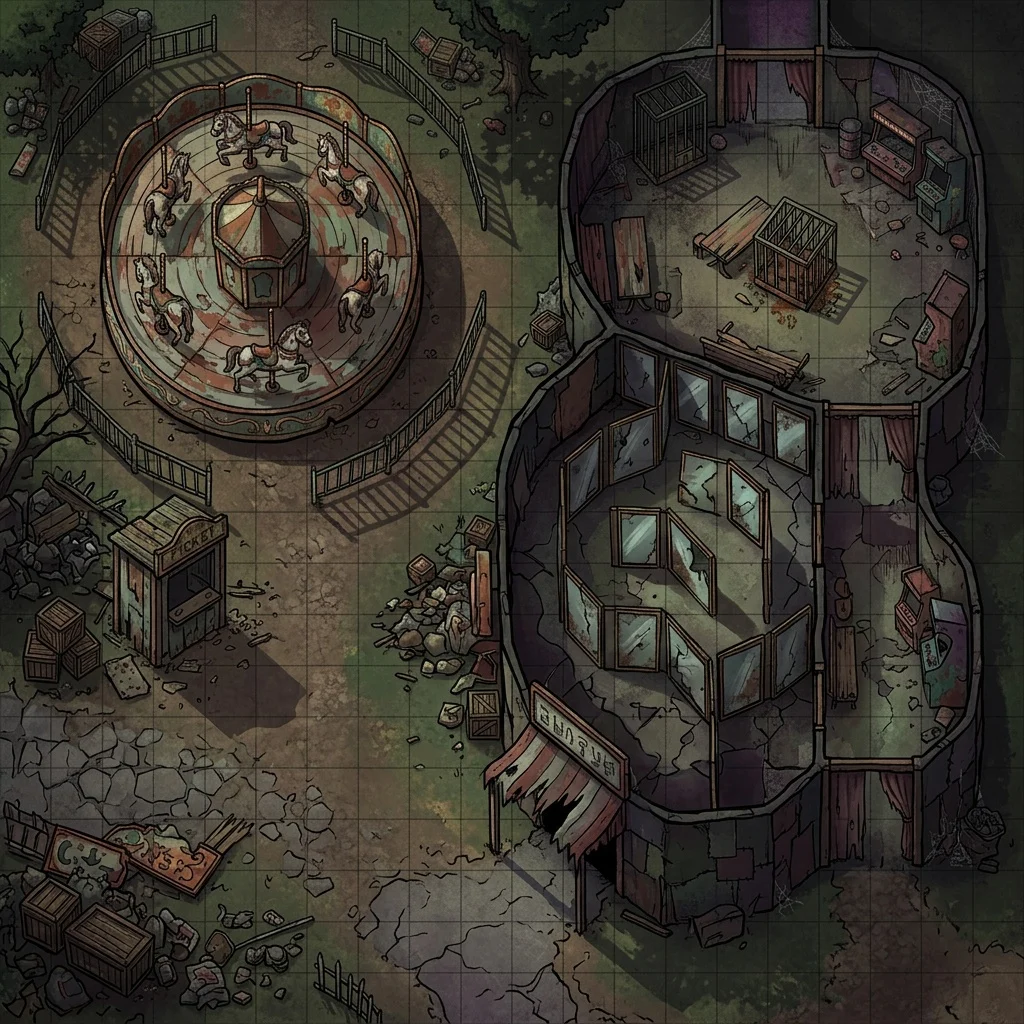
The description
“Horror carnival funhouse interior, cracked mirror maze, stopped carousel outside, empty ticket booth”
Padded cells, rusted beds, the hall with the trail on the floor. Name what was left behind and the ward tells the story before anyone speaks.
A rock the storm owns, the spiral stair, the boat that will not get anyone home. Isolation is the encounter, so describe the one way in.
Boarded doors, a pyre in the square, cages on the gallows. Say what the village did about its problem and the map shows the evidence.
Collapsed roofs, open graves, candles somebody keeps lighting. Sacred ground gone wrong gives a scene its cover and its dread.
Mirror mazes, a carousel that stopped mid-turn, a ticket booth with the lights off. Describe what should be joyful and the wrongness does the rest.
The gothic staples. The example gallery shows a decaying Victorian manor and a candlelit ritual chamber with the descriptions that made them.
Write it the way you’d narrate it: the ward, what’s on the floor, which cell door is open. One sentence made each map above. More detail gives you more control.
Square for a room, Wide for a road, Cinematic for the set piece. 1K for quick prep, 2K when players zoom in, 4K for print. Painted, Gritty, or Ink to match the campaign.
Under a minute later the map is in your library as a standard image. Drag it onto your VTT page, or print it.
The first description on this page, exactly as typed
“Abandoned asylum ward, rusted beds, padded cells, a blood trail down the hall”
Every map runs through rules written for the table, so what comes back is something you can play on.
Flat and overhead, no tilt, so tokens sit square on the floor.
No people or creatures baked in. Your tokens are the only ones on the map.
No borders, titles, or compass roses to crop away. What you download goes straight on the table.
What you describe wins: the content, the lighting, the layout. Painted, Gritty, and Ink change how it’s drawn, and the scene stays yours.
Under the hood: current frontier image models, wrapped in map rules refined scene by scene since the first tavern.
5 free maps
when you sign up, no credit card
Under a minute
from description to finished map
Credits come back
automatically if a generation fails
Commercial use
allowed on every tier, including free
Yes. Describe the light source, a burning pyre, candles, moonlight through a broken roof, and the map is drawn dim around it. The image still reads at the table, and your VTT’s own lighting and fog handle the rest.
Blood, wreckage, and the signs of what happened, yes. The engine draws every scene empty of people and creatures, so the bodies, the cultists, and the thing in the dark are your tokens to place.
Yes. A haunted chapel is a haunted chapel. Describe it and use the map with whichever system your table runs.
No grid lines are drawn on the image. Roll20, Foundry VTT, and Owlbear Rodeo each overlay their own grid on an imported map, so you set the square size once in the VTT and nothing on the image fights the alignment.
Your first 5 maps are free at 1K resolution, with no credit card. After that, a 1K map costs 1 credit, 2K costs 2, and 4K costs 4. The monthly plan is $4 for 15 credits, rolling over up to 30, and a $3 pack adds 10 credits that never expire.
Yes. Commercial use is allowed on every tier, including the free one. Run paid sessions with them, put them in a module you sell, or print them for a convention table.
5 free maps, no credit card required.
Notify me at launch