Brief the crew on the run. A top-down, gridless map comes back in under a minute.
Cyberpunk RED, Shadowrun, or any crew that runs at night
Cyberpunk runs happen at street level and on the rooftops above it. Describe the lobby, the night market, or the clinic the way the fixer would, and NeedAMap draws it from above with the turnstiles, the noodle stalls, and the surgery chair where you put them, ready for Roll20, Foundry VTT, Owlbear Rodeo, or print.
One lobby, one market, one rooftop per map, at the scale where a five-foot square is a stall or a turnstile lane. Neon on wet concrete is the register, and the same description box handles a megacorp atrium, an overpass full of stalls, and a server hall behind a breached door.
Five cyberpunk maps from the library. The words on the left made the map on the right.
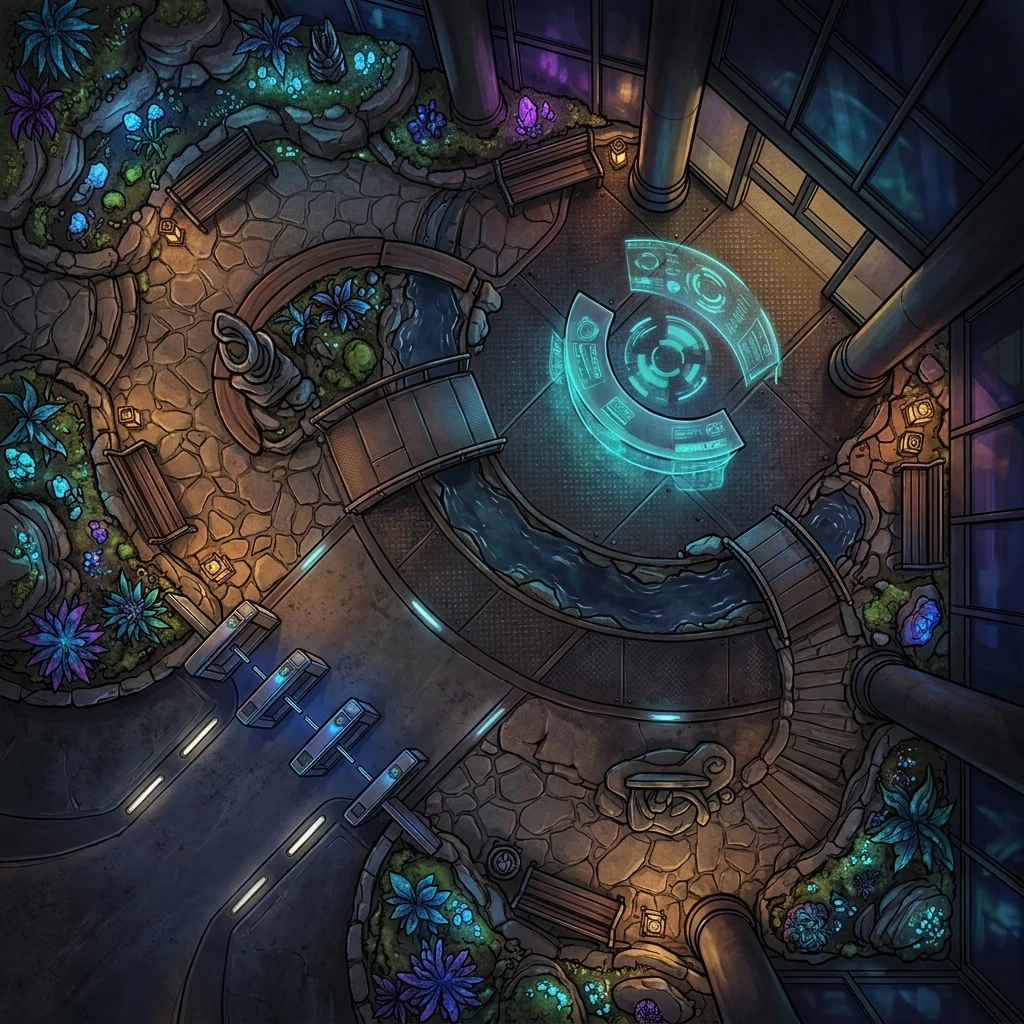
The description
“Cyberpunk megacorp lobby at night, glass atrium, security turnstiles, holographic reception desk”
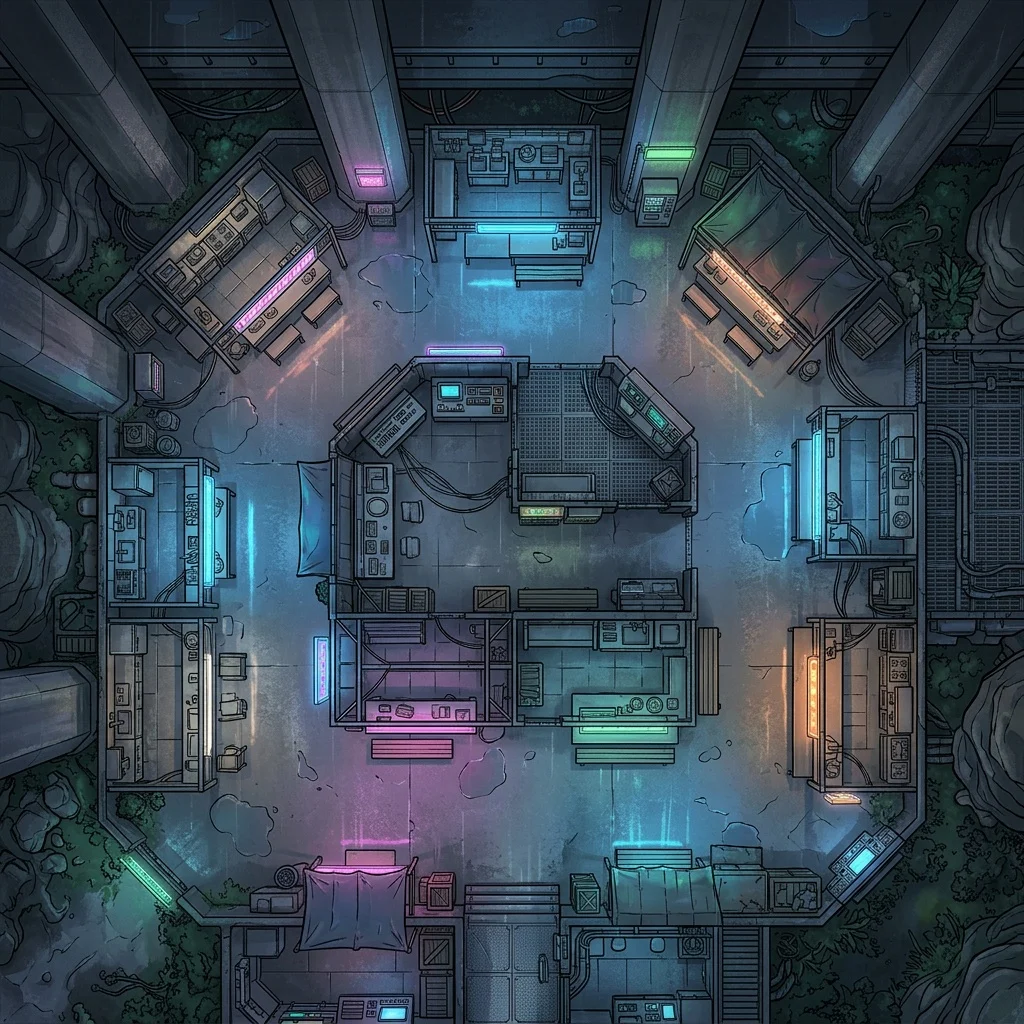
The description
“Cyberpunk night market under an overpass, noodle stalls, neon, rain-slick concrete”
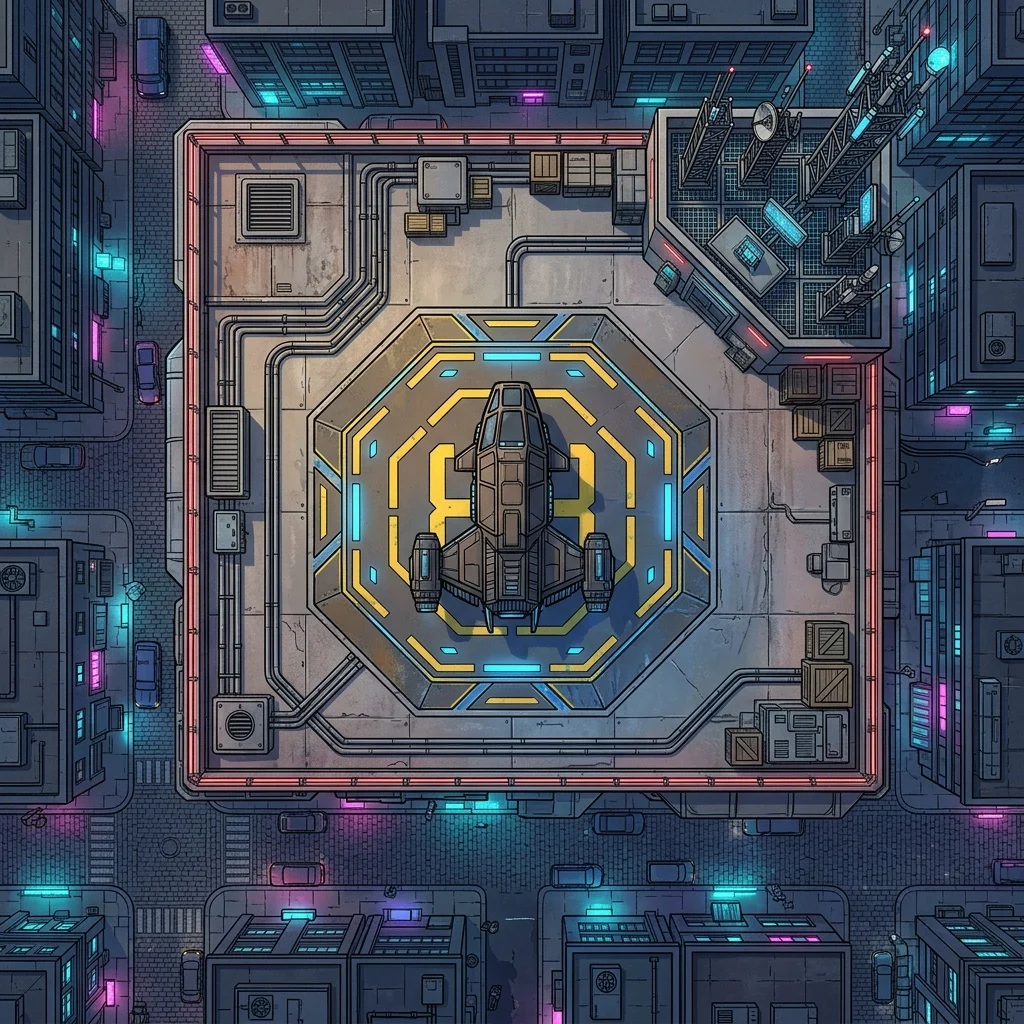
The description
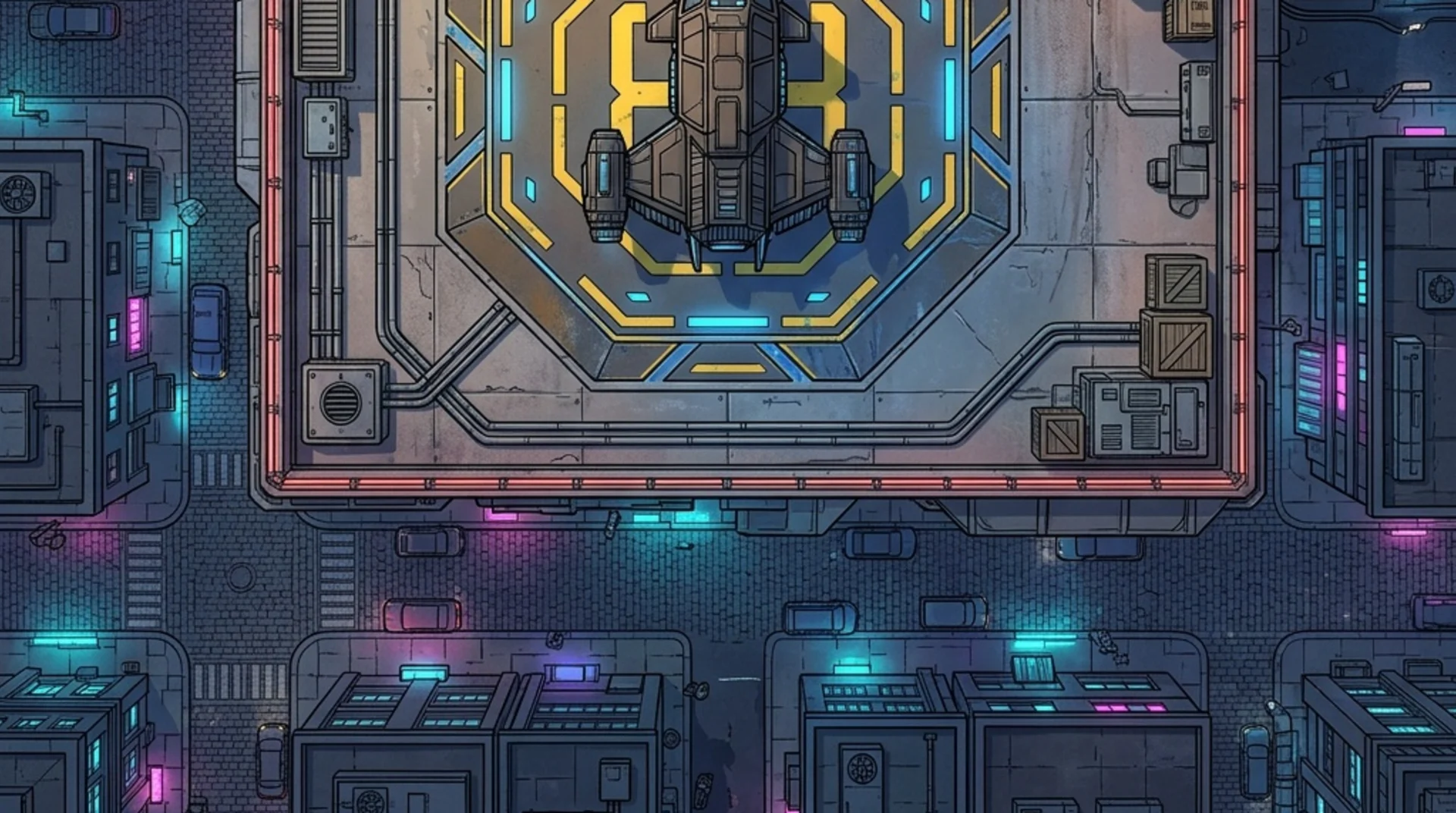
“Cyberpunk corporate rooftop landing pad, parked aerodyne, antenna arrays, neon city far below”
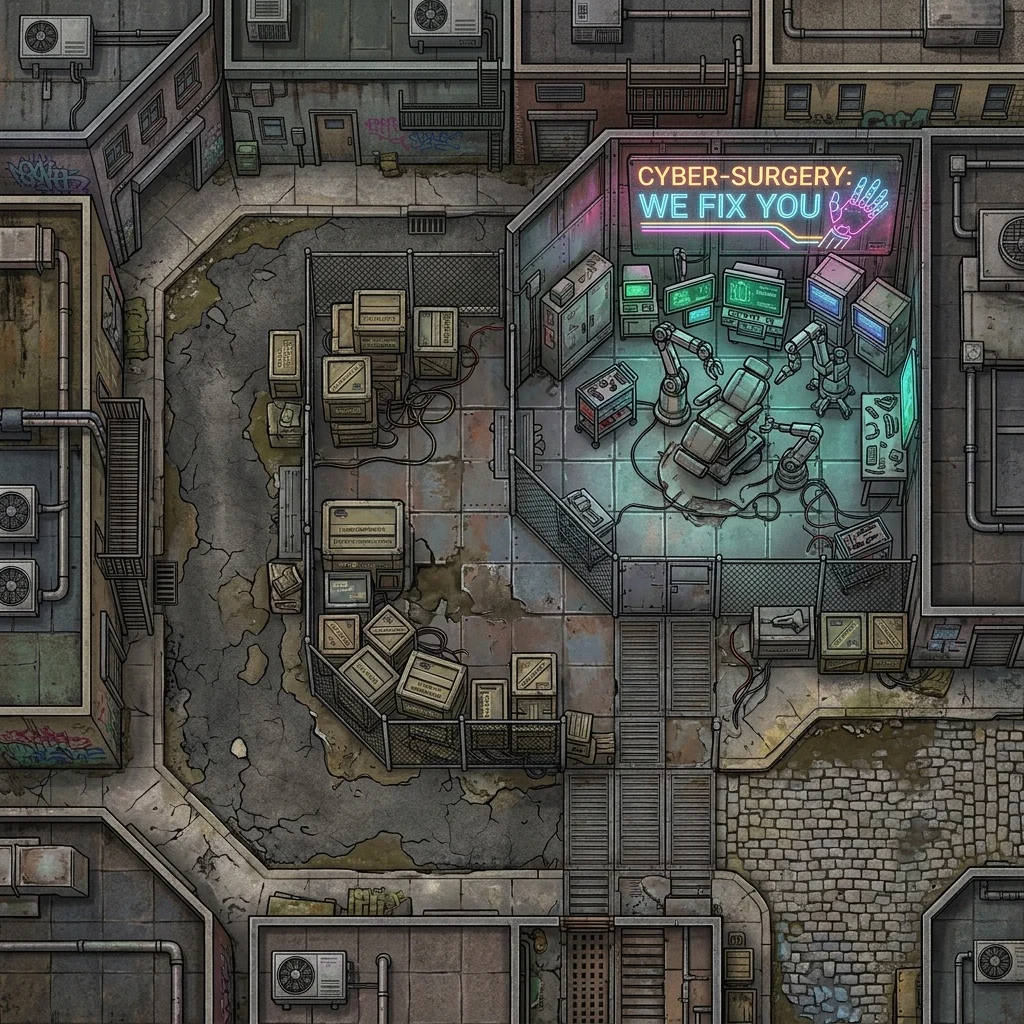
The description
“Back-alley ripperdoc clinic, surgery chair, cyberware crates, a flickering neon sign”
The description
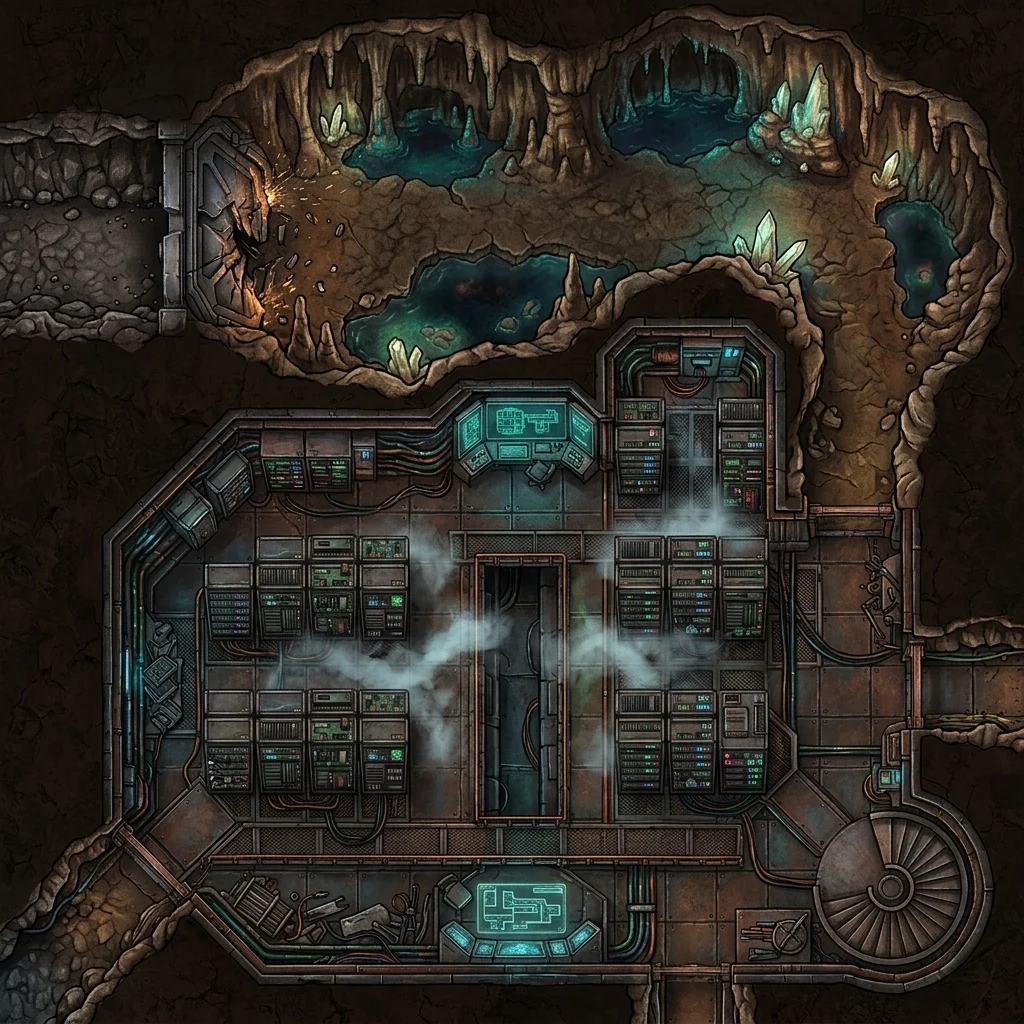
“Cyberpunk underground data vault, server racks, coolant mist, a breached blast door”
Glass, turnstiles, a holographic reception desk, and security that has already noticed you. Describe the entrances and the map gives the run its first problem.
Noodle stalls under an overpass, neon on wet concrete, crowds you will have to push through. Say where the stalls are and the chase has its lanes.
A parked aerodyne, antenna arrays, the city far below. Rooftops are where extractions happen, so describe the pad and the edges.
A surgery chair, cyberware crates, a neon sign that flickers. Alleys give a fight its cover and its exits.
Racks in rows, coolant mist, the blast door that did not hold. Say what is behind the door and the map shows what the crew came for.
Where the crew lives between jobs. The example gallery shows a megablock hallway, a neon arcade bar, and a scrapyard at dusk with the descriptions that made them.
Write it the way you’d narrate it: the lobby, where the turnstiles are, what the desk is projecting. One sentence made each map above. More detail gives you more control.
Square for a room, Wide for a road, Cinematic for the set piece. 1K for quick prep, 2K when players zoom in, 4K for print. Painted, Gritty, or Ink to match the campaign.
Under a minute later the map is in your library as a standard image. Drag it onto your VTT page, or print it.
The first description on this page, exactly as typed
“Cyberpunk megacorp lobby at night, glass atrium, security turnstiles, holographic reception desk”
Every map runs through rules written for the table, so what comes back is something you can play on.
Flat and overhead, no tilt, so tokens sit square on the floor.
No people or creatures baked in. Your tokens are the only ones on the map.
No borders, titles, or compass roses to crop away. What you download goes straight on the table.
What you describe wins: the content, the lighting, the layout. Painted, Gritty, and Ink change how it’s drawn, and the scene stays yours.
Under the hood: current frontier image models, wrapped in map rules refined scene by scene since the first tavern.
5 free maps
when you sign up, no credit card
Under a minute
from description to finished map
Credits come back
automatically if a generation fails
Commercial use
allowed on every tier, including free
Cyberpunk is street level: lobbies, markets, rooftops, clinics, vaults. Sci-fi is ships, stations, and other worlds. Describe neon and wet concrete and you get the street; describe bulkheads and airlocks and you get the ship. The sci-fi battle maps page has five of those.
Yes, when you ask. Mention a neon sign in the description and the engine allows lettering on the map; leave signs and graffiti out and it works to keep text off. Lettering that does appear is the model’s, so treat it as set dressing rather than words your players should read.
Yes. A map is an image with no rules attached. The same night market runs a Shadowrun firefight, a Cyberpunk RED shootout, or a CY_BORG heist, and your VTT supplies the grid.
No grid lines are drawn on the image. Roll20, Foundry VTT, and Owlbear Rodeo each overlay their own grid on an imported map, so you set the square size once in the VTT and nothing on the image fights the alignment.
Your first 5 maps are free at 1K resolution, with no credit card. After that, a 1K map costs 1 credit, 2K costs 2, and 4K costs 4. The monthly plan is $4 for 15 credits, rolling over up to 30, and a $3 pack adds 10 credits that never expire.
Yes. Commercial use is allowed on every tier, including the free one. Run paid sessions with them, put them in a module you sell, or print them for a convention table.