Brief the team on the building. A top-down, gridless map comes back in under a minute.
Delta Green, Monster of the Week, or any present-day table
Modern scenes are the places you drove past today. Describe the garage, the gas station, or the office floor the way the team would case it, and NeedAMap draws it from above with the crashed cars, the pumps, and the cubicles in place, ready for Roll20, Foundry VTT, Owlbear Rodeo, or print.
Each map is one building or one lot at encounter scale, where a five-foot square is a parking space or a cubicle. Concrete and glass give a firefight its lanes, and the same description box handles a rooftop at night, an emergency room, and a diner off the highway.
Five modern maps from the library, with the description each one was made from.
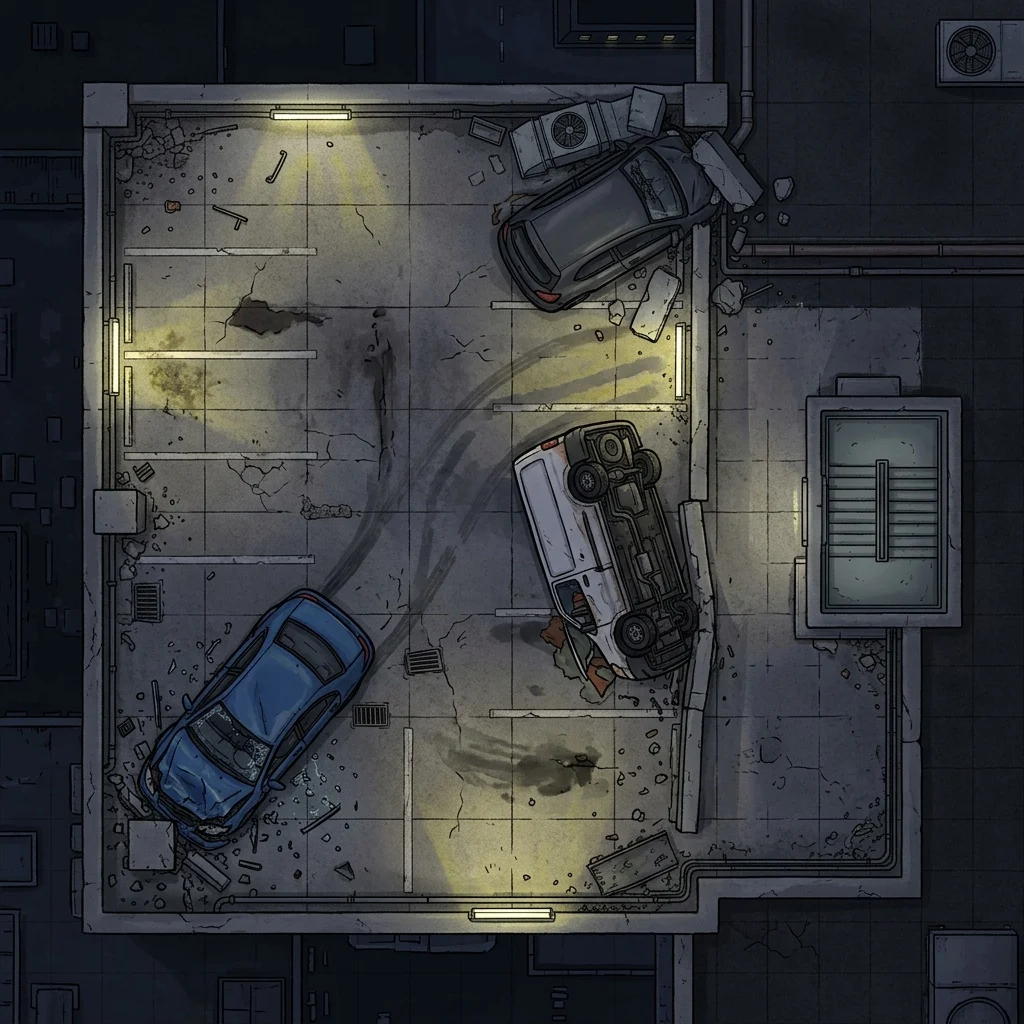
The description
“Rooftop parking garage at night, flickering lights, crashed cars, a stairwell door”
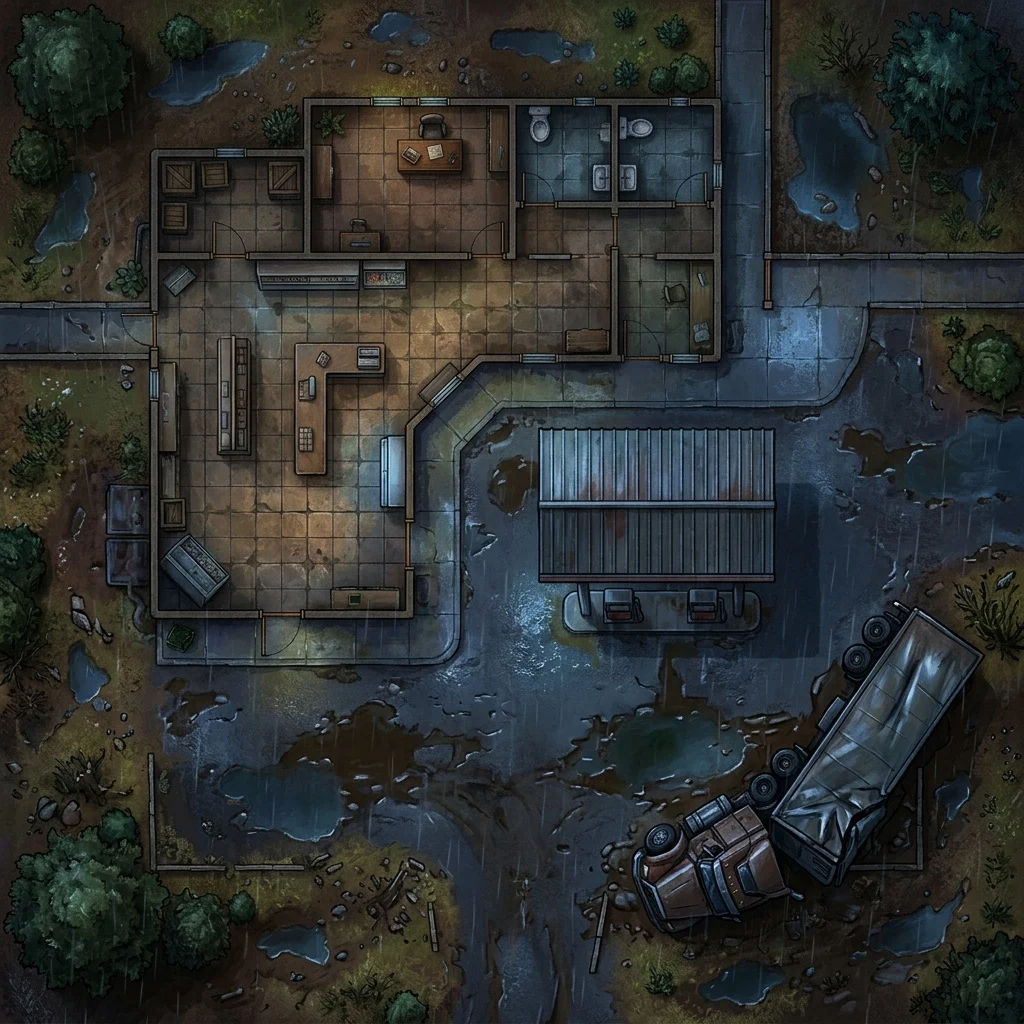
The description
“Rain-soaked gas station at midnight, pumps, convenience store, an overturned truck”
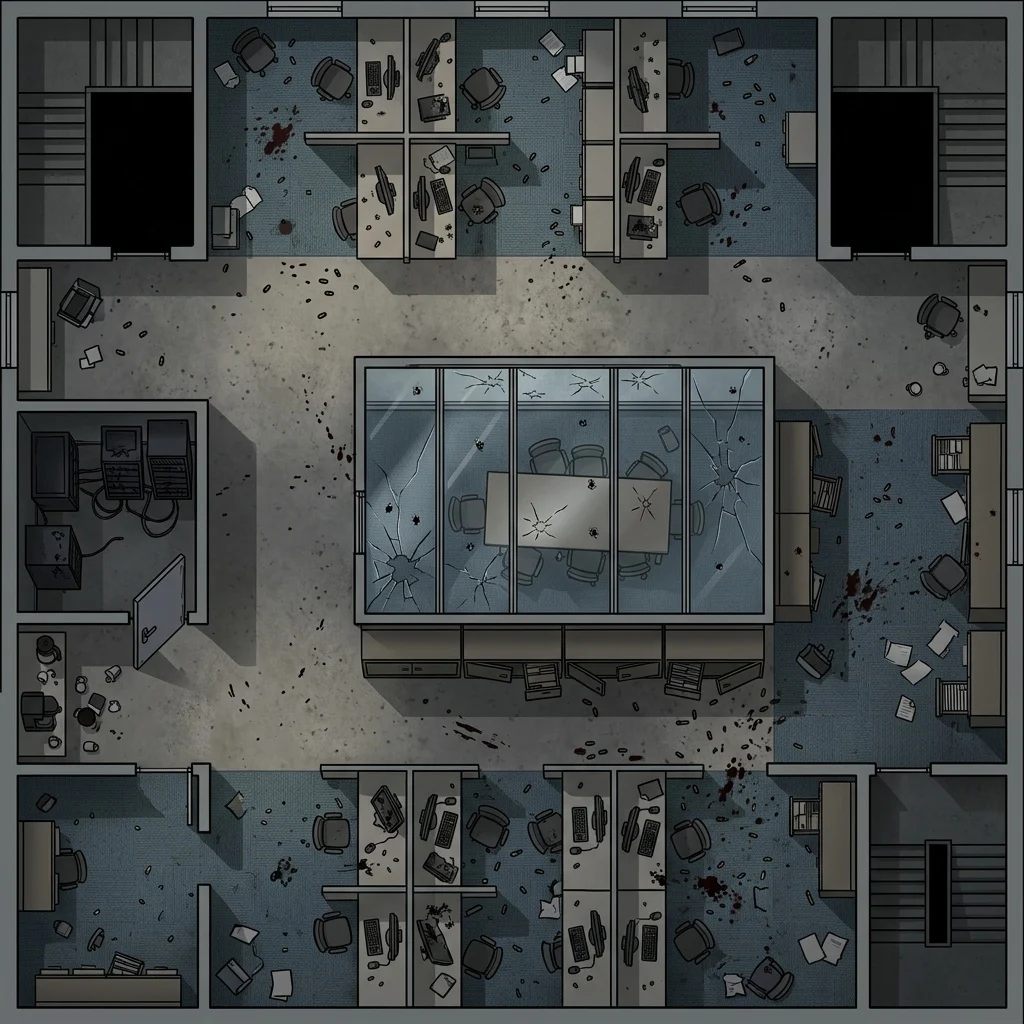
The description
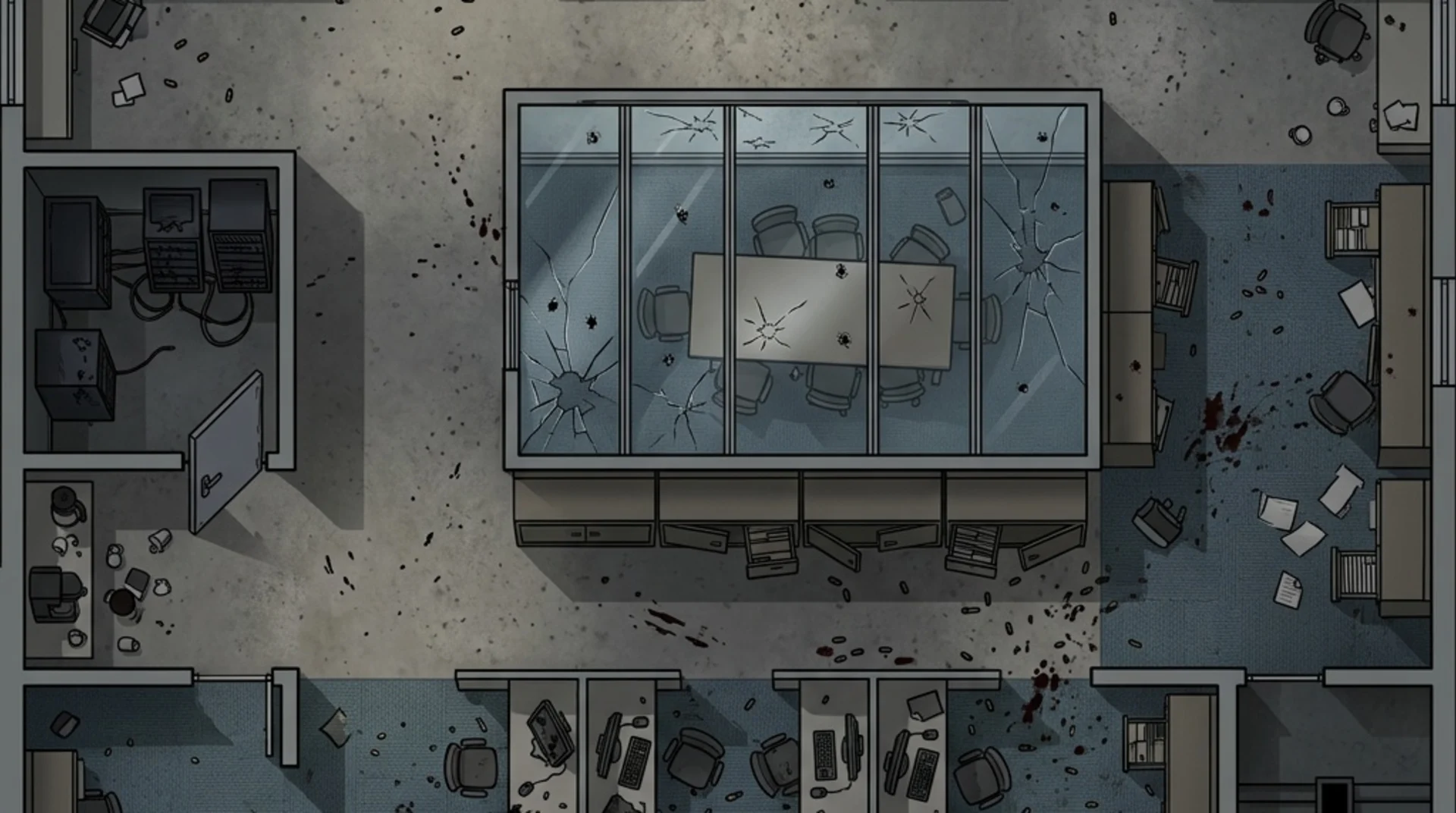
“Corporate office floor after a shootout, cubicles, glass conference room, server closet”
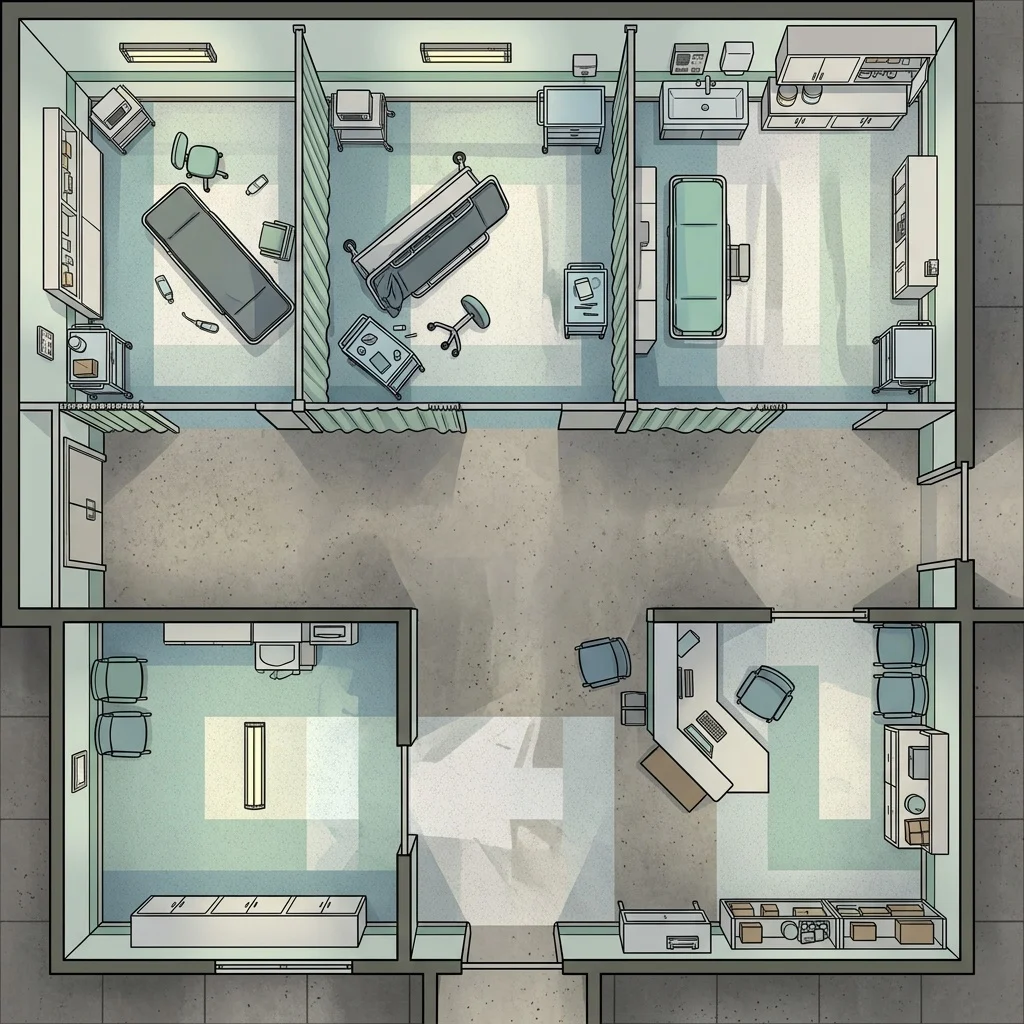
The description
“Modern hospital emergency room, curtained bays, overturned gurneys, flickering fluorescents”
The description
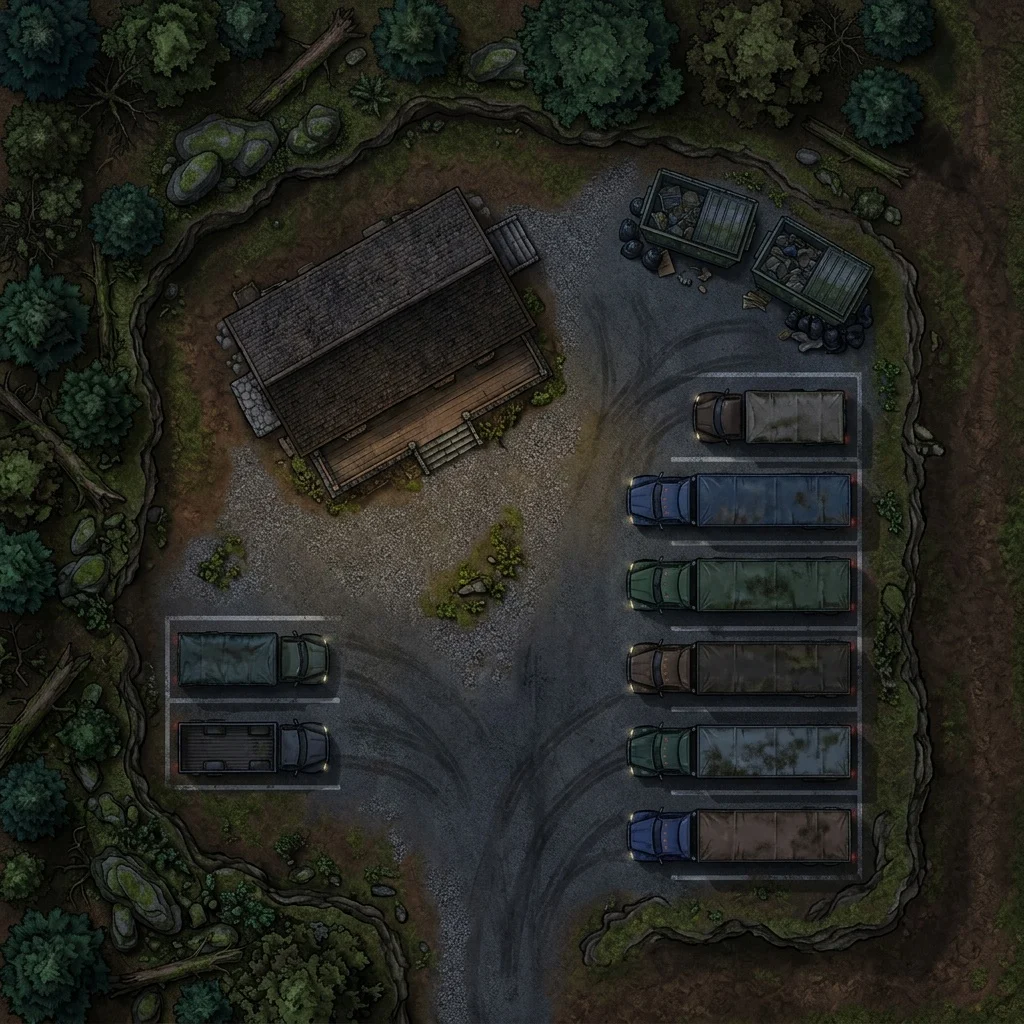
“Highway rest stop diner at night, parked semi trucks, dumpsters, a dark tree line”
Flickering lights, crashed cars, one stairwell door. Concrete gives a fight its lanes, so say where the cars ended up.
Pumps, a convenience store, a truck on its side in the rain. Describe the time of night and the map carries the weather.
Cubicles, a glass conference room, the server closet everyone forgets. Name what got shot and the aftermath is drawn in.
Curtained bays, overturned gurneys, a corridor under fluorescent light. Say which bay the patient was in.
Semi trucks in a row, dumpsters, a tree line that is too dark. Roadside scenes need the parking lot as much as the building, so describe both.
The staples. The example gallery shows a warehouse under broken skylights, a roadside motel, and a subway platform with the descriptions that made them.
Write it the way you’d narrate it: the garage, which lights still work, where the cars ended up. One sentence made each map above. More detail gives you more control.
Square for a room, Wide for a road, Cinematic for the set piece. 1K for quick prep, 2K when players zoom in, 4K for print. Painted, Gritty, or Ink to match the campaign.
Under a minute later the map is in your library as a standard image. Drag it onto your VTT page, or print it.
The first description on this page, exactly as typed
“Rooftop parking garage at night, flickering lights, crashed cars, a stairwell door”
Every map runs through rules written for the table, so what comes back is something you can play on.
Flat and overhead, no tilt, so tokens sit square on the floor.
No people or creatures baked in. Your tokens are the only ones on the map.
No borders, titles, or compass roses to crop away. What you download goes straight on the table.
What you describe wins: the content, the lighting, the layout. Painted, Gritty, and Ink change how it’s drawn, and the scene stays yours.
Under the hood: current frontier image models, wrapped in map rules refined scene by scene since the first tavern.
5 free maps
when you sign up, no credit card
Under a minute
from description to finished map
Credits come back
automatically if a generation fails
Commercial use
allowed on every tier, including free
Describe the layout and the objects: “two-pump gas station, convenience store with a back office, ice chest by the door.” The map follows the layout you give it, and the engine works to keep logos and lettering off the map unless your description asks for a sign.
Yes, when you describe them. Crashed cars, a row of semi trucks, an overturned truck all appear where you put them. They are scenery, so the people inside them are your tokens.
One map at a time. Describe the parking lot for the approach and the office floor for the fight, and both stay in your library for the session.
No grid lines are drawn on the image. Roll20, Foundry VTT, and Owlbear Rodeo each overlay their own grid on an imported map, so you set the square size once in the VTT and nothing on the image fights the alignment.
Your first 5 maps are free at 1K resolution, with no credit card. After that, a 1K map costs 1 credit, 2K costs 2, and 4K costs 4. The monthly plan is $4 for 15 credits, rolling over up to 30, and a $3 pack adds 10 credits that never expire.
Yes. Commercial use is allowed on every tier, including the free one. Run paid sessions with them, put them in a module you sell, or print them for a convention table.